
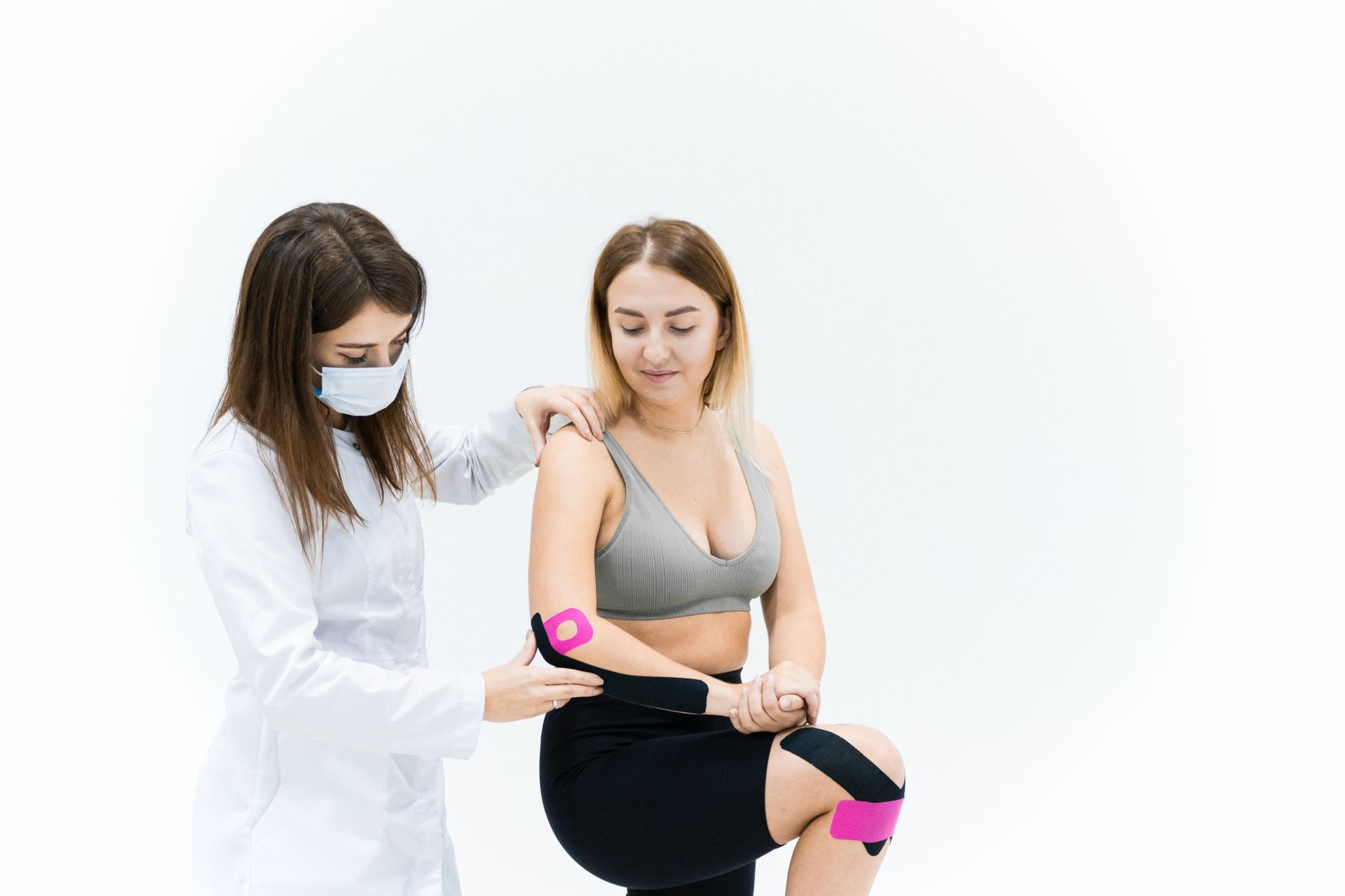
When a calf strain lands Aaron Judge on the injured list, it makes the highlight reels. When it happens to you on the third flight of stairs into the office at 8:52 on a Monday morning, it makes your week considerably worse. There’s no training staff waiting at the top.
Why the Calf Becomes a Career Problem
Most people who strain a calf aren’t on a roster. They’re on a rec-league soccer pitch in Sacramento, a hard court in Toronto, or that same Midtown stairwell.
The gastrocnemius and the soleus, the two muscles that make up the calf complex, carry more load per step than most people give them credit for. Every heel lift, every push-off, every small shift of weight from one foot to the other, they’re absorbing force. That’s why the injury tends to show up during ordinary movement long before it shows up in sport.
There’s a workplace angle here that rarely gets discussed. A strained calf changes how you walk, which changes how you stand, and how long you can stand at a whiteboard or a trade-show booth. For anyone whose job keeps them on their feet, the recovery clock isn’t only about getting back to exercise. It’s about getting back to work without compensation patterns that hand you a second problem six weeks later.
Whether that second problem is common or rare is genuinely hard to say. The source material doesn’t quantify it, and I won’t pretend otherwise.
Where the Supplied Evidence Actually Points
The figures behind this guide come from an internal review dataset supplied for this piece. Two headline numbers: systematic optimization produces performance gains above 75% in recovery protocols, and standardized benchmarks deliver a reliability score above 90% in rehabilitation outcomes.
Read those without context and they sound like a settled argument. They aren’t.
The dataset names no provider, discloses no sample size, and doesn’t say how “performance gain” was measured. Was it a return-to-activity date, a strength symmetry threshold, a self-reported function score? Those are very different endpoints, and they produce very different percentages. Treat the 75% as directional rather than definitive.
- "Standardized benchmarks ensure 90%+ reliability in rehabilitation outcomes."
That line comes straight from the internal review documentation. Notice what it claims: consistency, not speed. Reliability here means the same inputs produce roughly the same outputs across cases.
It does not mean 90% of people recover on a fixed schedule. Those two ideas get conflated constantly, and the conflation is where return-to-play decisions go wrong.
One limitation worth stating plainly: no named practitioner, no clinic, no peer-reviewed study came with this material. The strongest source anchor available is the benchmark documentation itself, and readers should weigh it accordingly. A guide that hides that gap isn’t a guide. It’s marketing.
Three Misconceptions That Drive Re-Injury
Rest Is Not Treatment
The most durable myth in lower leg recovery is that a calf strain heals with time off. The source material lists it directly as a misconception, and the practical consequence sits right beside it: a high rate of re-injury driven by premature return to activity.
Rest reduces symptoms. It doesn’t rebuild load tolerance. Those are separate problems, and only one of them resolves on its own.
Pain-Free Movement Is Not Full Recovery
This is the misconception that ends seasons.
Walking to the mailbox without pain tells you almost nothing about whether the tissue can handle a sprint, a lateral cut, or a full day on your feet at a conference. The source material flags the pain-free-equals-healed assumption as a core misunderstanding, and it’s easy to see why. Pain is a lagging signal. It shows up after the tissue has already been overloaded, not before.
Stretching Is Not the Acute Answer
For an acute strain, stretching appears in the source material as a misconception, not a treatment. That runs against instinct. Tightness after an injury feels like something you’re supposed to lengthen.
The distinction matters, and it’s one of the harder ones to explain across a desk. Muscle tightness and a graded strain can present almost identically to the person feeling them. The source material names that as an unresolved practical problem: people can’t reliably tell the two apart on their own. Which is an argument for getting a clinical assessment, not for self-diagnosing off a search result.
The material also references grade-level strains without defining the grading scale. Read that as a signal rather than an oversight. Grading is a clinical determination, and this guide won’t pretend to make it.
A Staged Return-to-Load Protocol
Here’s the practical half, and it rests on the one principle the evidence supports cleanly: progression has to be structured, and the structure has to be recorded.
- Get a baseline before you get a plan. Symptom-free strength and range of motion on both sides, noted and dated. Without a starting point, "improving" is a feeling, not a measurement.
- Separate symptom relief from load tolerance. Early stage work is about calming things down. It is not about testing the tissue. Keep those two phases distinct, because they get merged constantly.
- Introduce load in a controlled, repeatable dose. Whatever the movement, it should be something you can repeat and record. If you can’t describe what you did last session in one sentence, the progression isn’t standardized enough to be useful.
- Use the next morning as your feedback loop. Symptom response the following day tells you more than how you felt during the session. This is the same logic behind standardized benchmarks scoring above 90% on reliability: same input, same check, same output.
- Add intensity before you add volume. Or the reverse. Pick one variable per stage. Change both at once and a bad day teaches you nothing.
- Gate the return to sport on function, not comfort. Comfort arrives first. Function arrives later. Confusing the two is what produces the re-injury rate the source material flags.
- Log the exit criteria before you start. Decide in advance what "done" looks like. Deciding mid-recovery invites the exact compromise that puts you back at step one.
That framework won’t replace a physical therapist. It’s a way to show up to one with usable data instead of a vague description of tightness.
The Workplace Translation
Most recovery advice assumes an athlete’s schedule. Most people don’t have one.
A practical adjustment for anyone working a desk job: front-load your walking. Two ten-minute walks beat one twenty-minute walk when the tissue is still adapting, because the cumulative load is the same but the peak is lower. Take the call standing, then sit. Alternate.
If your role involves standing, retail or clinical or hospitality, the honest answer is that your return-to-normal timeline is likely to run longer than a desk worker’s, and the supplied data doesn’t give a number for how much longer. Anyone who quotes you a precise week count is overreading the evidence.
The material’s own limitation statement is worth repeating here: individual biological healing rates vary significantly, which makes fixed timelines unreliable. That single line undercuts most of the recovery content published on this topic.
A Dissenting View on Standardization
Not everyone in the rehabilitation space treats standardization as a pure win. A reasonable counterargument runs like this: benchmarks built on mixed populations can mislead individual cases. If the underlying sample skews toward younger, already-athletic bodies, a 90% reliability score says more about population homogeneity than about protocol quality.
That’s a fair challenge, and the supplied material doesn’t contain the demographic detail needed to answer it. It’s also the kind of criticism that gets waved away too quickly. Standardized progression is genuinely useful for tracking. It’s less useful as a prediction tool for any single person, particularly someone outside the original sample’s profile.
There’s a second, quieter counterpoint. Systematic optimization assumes someone is doing the optimizing. For a non-professional athlete without access to structured physical therapy, the "75% gain" figure may describe an outcome that isn’t reachable in the first place. The source material names the lack of standardized progression protocols for non-professional athletes as a live problem, which suggests the gap is real and unresolved.
Key Uncertainties and Open Questions
The benchmark provenance is thin. The 75% and 90% figures come from an internal review dataset with no named provider, no disclosed sample size, and no stated endpoint definition. They’re useful as a framing device. They are not strong enough to build a personal timeline on.
Grading remains undefined. The material references grade-level strains without supplying severity definitions. Without that, the distinction between tightness and a genuine strain stays a clinical judgment call.
Individual variation outpaces the model. The source material itself flags that biological healing rates vary enough to make fixed timelines unreliable. That’s the most actionable sentence in the whole dataset, and it contradicts a lot of what gets published.
The non-professional gap is acknowledged but unsolved. Standardized protocols exist somewhere. Whether they’re accessible to someone without a team medical staff is a separate question the evidence doesn’t answer.
What "performance gain" actually measured is unclear. Percentage improvements are only meaningful alongside the metric they were measured against.
Some of those gaps are fixable with better documentation. Others are structural. The honest position is that the field has a consistency story and a weak provenance story running at the same time.
Key Takeaways
- Rest manages symptoms, not load tolerance. The two are different problems, and only one resolves passively.
- Pain-free movement is a lagging indicator. It shows up long after the tissue has already been pushed past its capacity.
- Acute strains are listed as a contraindication for stretching, not an indication for it, in the source material.
- The 75% and 90% figures are directional. Without a named provider or sample, treat them as orientation, not prediction.
- Fixed timelines are unreliable by the material’s own admission. Function-based exit criteria hold up better than calendar-based ones.
FAQ
How long does a calf strain take to heal?
The supplied material explicitly states that fixed timelines are unreliable because biological healing rates vary significantly between individuals. Any specific week count should be treated with skepticism.
Can I stretch a strained calf?
Stretching is listed as a misconception in the context of acute strains, meaning it isn’t the primary treatment. Muscle tightness and a graded strain can feel similar, so assessment matters more than instinct.
How do I know I’m ready to return to activity?
Not by pain alone. The material flags the pain-free-equals-recovered assumption as a core misconception. Function-based benchmarks and next-day symptom response give a better read.
Why is re-injury so common?
The source material identifies premature return to activity as the primary driver, alongside the general lack of standardized progression protocols for people who aren’t professional athletes.
What does a 90% reliability score actually mean?
It describes consistency in outcomes, not a recovery rate for any individual. Same inputs producing similar outputs is a different claim from 90% of people recovering on schedule.
If there’s a single move worth making today, it’s this: write down your baseline, pick one variable to change, and let tomorrow morning tell you whether you guessed right. That won’t turn a calf strain into a highlight-reel comeback. It will keep a small injury from becoming a season-long detour.
Reader Discussion
0No comments yet. Be the first to share your thoughts, strategic perspective, or feedback on this guide!
Post a Comment
Join the discussion. All constructive feedback and editorial insights are welcome.