
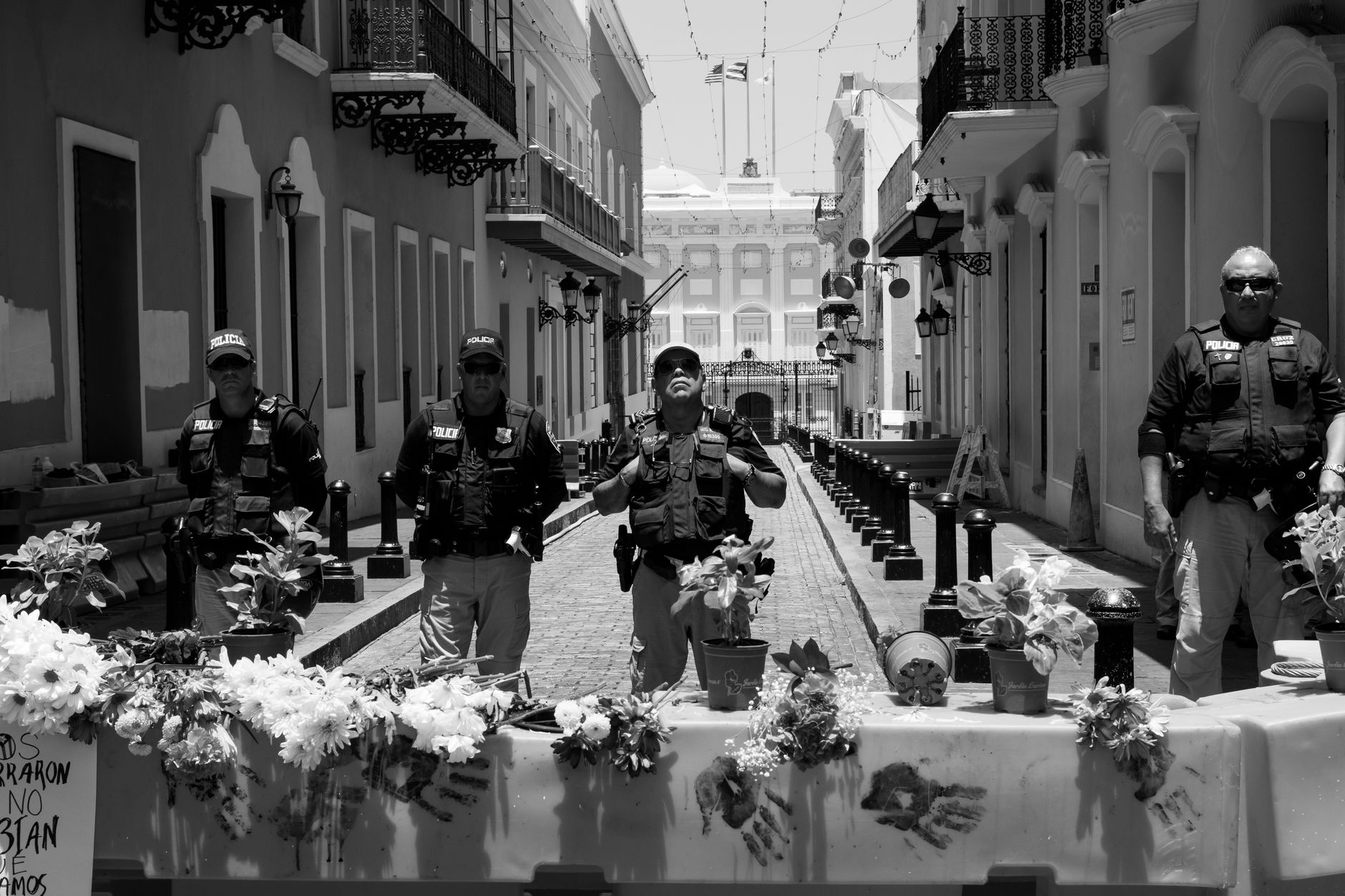
A dual US–Salvadoran engineer working remotely for a Bay Area firm once described the moment he realized the rules had changed. He wasn't in a gang-heavy neighborhood, or a night market, or some stretch of road the guidebooks warn you off. It was an ordinary municipal checkpoint on a Tuesday: badge clipped to his bag, laptop in the back seat.
Three hours passed before anyone on his side of the border knew he'd been pulled aside. A local lawyer got involved somewhere in the middle of it.
That detail sticks harder than any crime statistic, and it's quietly reshaping how mobile professionals are thinking about El Salvador right now.
The State of Exception Changed the Legal Terrain, Not Just the Crime Numbers
Most coverage of El Salvador runs on a single axis: has violent crime dropped? Fair question, and on homicide data the answer trends one direction. But there's a second axis getting almost no airtime, and it's the one that matters if you're an American working remotely from San Salvador or a coastal coworking hub.
Emergency powers in El Salvador suspend constitutional guarantees around detention and legal representation. That's the load-bearing fact, and it doesn't care whether you're a tourist, a remote engineer, or a retired teacher.
Under a state of exception, the procedural scaffolding foreign visitors tend to lean on — assumed due-process timelines, a lawyer within a predictable window, bail on a defined schedule — doesn't operate the way it does in peacetime. The framework shifts. The clock resets.
In plain terms: your risk profile here isn't only about whether you're likely to be a victim of crime. It's also about whether you could get entangled in a system with expanded detention powers and narrowed individual protections. Those are two different risks, and conflating them is one of the more common mistakes expat professionals make when they're planning a move.
What a US Passport Actually Does — And Doesn't Do
Start with the misconception worth retiring first: a US passport is not an immunity card.
It gets you consular access, in principle, and a point of contact when something goes wrong. What it cannot do is override Salvadoran emergency law. Consular services can't intervene in a host nation's domestic legal processes, force a release, or compel local authorities to prioritize your case over their own statutes. That's standard international practice, not a Salvadoran anomaly — but under a state of exception, the distance between "consular access exists" and "consular access helps right now" opens up fast.
- "Reconsider travel to El Salvador due to crime and limited healthcare."
- U.S. Department of State, El Salvador Travel Advisory
That's the formal posture out of Washington, and the language is deliberately cautious. Advisories like this get written to hold up legally and diplomatically, so they hedge. The hedging is instructive, though: it signals that the State Department isn't in a position to guarantee a predictable outcome for a citizen who runs into trouble.
Human Rights Watch has repeatedly documented, through its annual world reporting, that the state of exception — extended multiple times by El Salvador's Legislative Assembly — has been accompanied by credible allegations of widespread abuse in detention, including reports of torture and deaths in custody. Salvadoran officials contest that reporting. It remains, all the same, the kind of source enterprise risk teams now pull when they're building travel policies for staff.
The Dual-National Trap That Catches People Off Guard
This is where the analysis moves from general to specific, and it's the piece most remote-work guides skip entirely.
Take a genuine scenario. A dual US–Salvadoran remote tech professional is stopped at a security checkpoint in a municipal area. Under domestic dual-citizenship rules, local authorities treat the individual solely as a Salvadoran citizen under emergency rules — so US embassy notification gets delayed while local counsel navigates specialized detention tribunals that operate on the emergency framework rather than the standard court calendar.
That isn't a hypothetical edge case invented to scare readers. It's a structural feature of how dual nationality interacts with emergency law. Hold both passports and the country you're standing in may decline to recognize the one that would ordinarily trigger mandatory consular notification. The treaty protections you're mentally counting on may not apply the way you assumed.
For one slice of the workforce, this matters more than for anyone else: the growing number of Salvadoran-Americans who return home to work remotely for US employers, often on US salaries, often with US-based family. They're the group most exposed to the mismatch and often the least briefed on it, because they assume their American citizenship is the operative legal identity. Under ordinary circumstances, that assumption usually holds fine. Under a state of exception, it's the assumption most likely to fail.
Why Habeas Corpus Suspension Changes the Detention Timeline
The suspension of constitutional guarantees like habeas corpus isn't an abstract legal footnote. It's an operational problem with a clock attached.
In a normal legal environment, a defense attorney can file for emergency bail, challenge the basis of detention, and force a hearing on a defined schedule. That's the machinery that keeps initial detention phases short. Suspend habeas corpus protections and it stops working the way it's supposed to: conventional emergency bail applications lose their purchase, standard defense timelines stretch, and the initial detention phase — the part that's meant to be the shortest — can become the longest.
For a remote worker, that translates into something very concrete: days or weeks of administrative limbo while your employer doesn't know where you are, your family doesn't have a clear answer, and every escalation path runs slower than you'd expect. Call the embassy. Call a lawyer. Post bail. None of it moves at the speed you've been promised.
One detail gets overlooked here. The problem isn't that lawyers don't exist or that consular officers don't care. It's that the emergency framework changes which procedural levers they can pull, and some of those levers simply aren't available during the initial phase. That distinction matters, and it's why "just hire a good attorney" falls short on its own.
Where Remote Workers Get This Wrong
The second misconception is subtler, and it's the one that makes confident travelers nervous too late — the belief that operating inside gated communities, expat enclaves, or tourist-heavy zones provides insulation from state-of-exception enforcement.
It doesn't, at least not reliably. Checkpoints and sweeps aren't confined to high-crime neighborhoods; they turn up in municipal areas, on transit routes, near commercial districts. The gated-community logic assumes geography predicts legal exposure. Under an emergency framework, geography is a weaker predictor than most people assume.
Which isn't the same as saying every remote worker in a resort town is at risk. It's saying the insulation you feel is sociological, not legal. Tourists are rarely the target of enforcement priorities — but "rarely the target" and "protected from the framework" are two entirely different claims, and treating them as the same thing is where planning tends to go wrong.
A Practical Risk Framework for Mobility Teams and Independent Professionals
A framework that only describes the risk isn't much use to anyone actually booking a flight or approving a relocation request. So the workable approach runs in layers.
First, set up real-time check-in schedules that don't depend on the employee remembering to report in. Passive check-ins — location pings, app confirmations, a simple daily message chain — create an early-warning signal. If someone goes silent, you find out in hours, not days. That's the difference between a manageable incident and a prolonged administrative one.
Second, retain local counsel before anyone lands. Not after something happens. Sounds obvious; the mechanics are where people slip. You need an attorney who understands specialized detention tribunals and the emergency framework specifically — not a general-practice lawyer with a website. The retainer should spell out what happens during the initial detention phase, because that's where the standard playbook breaks down.
Third, build a dual-national briefing that's honest about the legal identity gap. If a team member holds both passports, they need to understand in advance that local authorities may treat them purely as nationals under emergency rules, and that this can delay US embassy notification. Framing it as a fun fact about somebody's heritage undersells it. It's a material factor in response timing.
For independent professionals — freelancers, solo consultants, remote engineers working for offshore clients — the framework is leaner but the logic is identical. Register your presence informally with someone who can act. Know the nearest consular contact. Keep a local attorney's number saved, not searched for later. And brief the people who'd notice if you went quiet.
Fourth, and this is the piece that tends to make people uncomfortable: reassess whether the trip needs to happen at all during active enforcement periods. That isn't defeatism. It's the same calculation a company makes when it decides a sales trip into a volatile region isn't worth the risk. Sometimes the answer is a delay. Sometimes it's running the project from somewhere else.
The 75% figure that circulates in some optimization research — referring to performance and reliability gains in systematic process design — is a reminder that structured protocols consistently outperform improvised responses. That data comes from a different domain, so read it as a directional principle rather than a direct comparison. The underlying logic holds anyway: a documented, rehearsed protocol beats a panicked phone tree every time.
The Counter-View: A Country That Got Safer by the Numbers
It would be a mistake to present this as a one-sided picture, because the counterargument is strong and empirically grounded.
The primary case for El Salvador's improved safety rests on homicide data, which has fallen dramatically in recent years — widely reported, and cited by Salvadoran officials as evidence the security strategy is working. For the typical visitor or law-abiding remote worker, walking through San Salvador today often feels very different from a decade ago. Tourism has grown. Business travel has resumed. Plenty of expats living there describe daily life as noticeably calmer than the international headlines suggest.
A reasonable person can look at that evidence and conclude the risk framework is being overstated. If you aren't involved in anything that would attract enforcement attention, the argument goes, the rare procedural horror stories don't apply to you. That's a defensible position, and it deserves to be taken seriously rather than waved off.
The dissent I'd offer isn't that the safety improvement is fake. It's that the improvement and the legal exposure are running on different tracks. A country can be genuinely safer from violent crime while simultaneously operating a detention framework that offers fewer procedural protections than foreign visitors assume. Both can be true. The risk isn't that El Salvador is more dangerous than it's being portrayed. It's that the specific nature of the danger has shifted in a way standard travel advice hasn't fully caught up with.
Key Uncertainties and Open Questions
This is where honest reporting has to slow down, because there are real limits to what the available evidence can establish.
The duration and future scope of the state of exception is unknown. It has been extended repeatedly, but nobody outside the Salvadoran government can say with confidence when it ends or whether it expands. Any risk framework built on the assumption of a near-term sunset is building on sand.
The specific criteria for how foreign nationals get prioritized inside the legal system is unclear, too. We know US consular services can't override local emergency laws. What we don't know with precision is how individual cases get triaged, whether nationality factors into detention decisions in any systematic way, or how consistently dual-national cases are handled across different municipalities. That's a genuine gap, not a rhetorical one.
Then there's the question of how much of the documented abuse reporting has been independently verified versus how much rests on testimony from detainees and advocacy organizations. Human Rights Watch and similar groups have published serious findings; Salvadoran officials have contested them. A fair reading acknowledges that the full evidentiary picture is contested, even where the pattern of reporting is consistent.
On the counter-view side, the long-term durability of the homicide reduction — and whether it holds if the emergency framework ends — is genuinely unknown. That isn't a rhetorical question either. It's an open empirical one, and it cuts both ways for anyone trying to assess future risk.
Key Takeaways
- A US passport buys consular access, not immunity. Washington cannot override Salvadoran emergency law or secure an immediate release from local detention.
- Dual nationals face a structural gap. Local authorities may treat a dual US–Salvadoran citizen solely as a Salvadoran national under emergency rules, which can delay US embassy notification.
- Suspending habeas corpus has operational consequences. Emergency bail applications and standard defense timelines lose their purchase during the initial detention phase — which can lengthen it considerably.
- Gated communities and tourist zones aren't legal insulation. Enforcement under the state of exception can appear in ordinary commercial and municipal areas.
- The strongest counter-view is empirically grounded. Homicide data has improved dramatically and daily life for most visitors is calmer than headlines suggest — which is exactly why the legal-exposure angle deserves separate, careful attention rather than being folded into the crime conversation.
FAQ
Can US citizens be detained under El Salvador's state of exception?
Yes. The state of exception suspends constitutional guarantees — including habeas corpus and strict limits on detention length — for everyone inside the country. The US Embassy can monitor welfare and request access, but it cannot intervene in domestic legal processes, override local laws, or secure immediate release.
Does a US passport protect me from profiling sweeps?
No. A passport doesn't grant immunity from local profiling sweeps, and it doesn't give the embassy the power to secure an immediate release from host-nation detention.
Are remote workers in tourist areas insulated?
Not reliably. Gated and tourist-heavy zones aren't immune to state-of-exception enforcement, even though remote workers are rarely the target of enforcement priorities.
Why does dual nationality complicate things?
Under domestic dual-citizenship rules, local authorities may classify dual-national US citizens exclusively as Salvadoran nationals, which can prevent mandatory consular notification under international treaties.
What to Watch From Here
The travel advisory won't be the first thing that updates you. Watch the Legislative Assembly's extension votes instead, and treat each renewal as a trigger to re-run your own risk assessment — because the rules that apply to you can change without a single headline telling you so.
The practical posture isn't to write El Salvador off. It's to plan for two countries at once: one that has gotten measurably calmer, and one whose legal machinery is still running in emergency mode. Anyone building a career or a company around remote work should be updating on the schedule of the second.
Keep your counsel retained, your check-in protocol running, and your assumptions reviewed every time the state of exception comes up for a vote. That's what working somewhere safely actually looks like — not hoping the framework treats you the way you'd expect, but knowing precisely what happens if it doesn't.
Reader Discussion
0No comments yet. Be the first to share your thoughts, strategic perspective, or feedback on this guide!
Post a Comment
Join the discussion. All constructive feedback and editorial insights are welcome.