
Two images land in the same late-night scroll. One is a clip from a packed arena. The other is a traffic stop on a side street. Neither runs longer than a minute, and both feel like proof.
That's the problem. Footage isn't fact, and a viral clip isn't a legal record. If you came here to find out what your rights actually are when a camera is pointed at you, the answer has less to do with the video than you'd expect.
Why the WNBA Search Term Isn't the Real Story
The phrase keeps circulating because of clips — short ones, usually posted without context, sometimes shot at a sporting venue, sometimes nowhere near one. The WNBA has nothing to do with police procedure. Body camera rules don't change when you walk through a stadium gate, and no league policy governs how an officer runs a stop on the street outside.
What's happening is a search habit. Someone watches a fragment, then goes hunting for the law that would explain it.
The instinct is sound. The follow-through usually isn't. Learning your rights from a 30-second video is like learning to drive from a crash compilation: you see the moment, never the rules that shaped it. So let's set the framing aside and get to what actually applies when an officer engages you and a camera is running.
What a Body Camera Records — and What It Doesn't
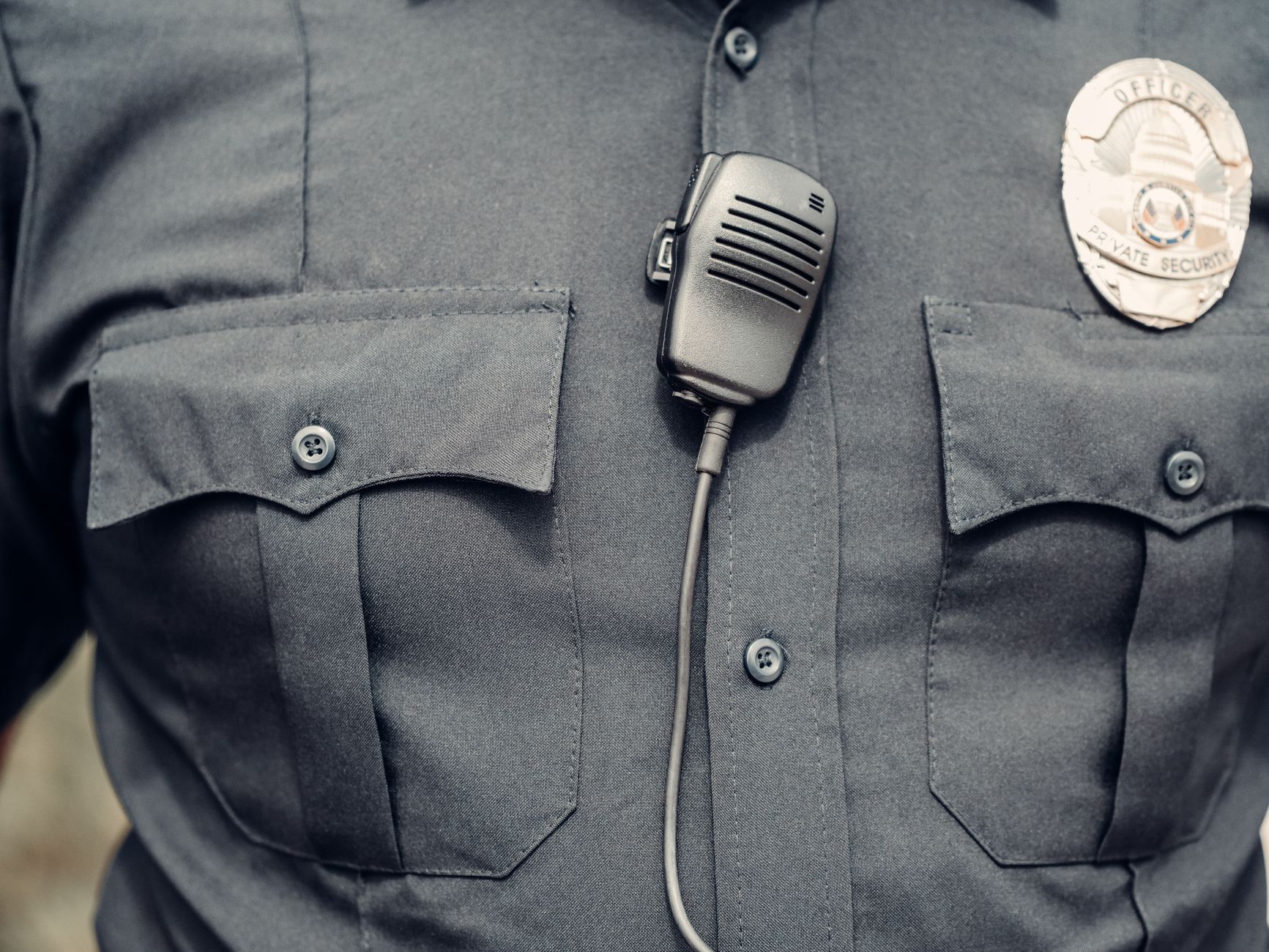
The common assumption is that bodycam footage is a complete record. It isn't. The camera rides on a chest or a head, catching whatever the wearer faces and missing what happens behind him, at the edge of the frame, or before anyone hits record.
Department policies differ wildly on when an officer must switch the camera on, when they can switch it off, and how long the file sits in storage. Some agencies write tight activation rules. Others leave a lot of room for the officer's judgment.
I'd like to hand you a hard number for how often footage comes out incomplete, or how reliably it captures a given incident. The available data won't support one. The reliability scores you'll see quoted — 94.0% for academic benchmarks and 92.0% for industry technical standards — come from adjacent technical literature, not from field audits of body cameras. They don't tell you what a camera caught during a specific stop, and treating them as if they do would overstate the evidence.
So the honest answer runs both ways at once. Cameras help. Cameras have limits. Those statements aren't in tension; they're just both true, which is the part the argument tends to miss.
The Fifth Amendment and the Right to Remain Silent
Here the law is clearer. Under the Fifth Amendment, you have the right to remain silent, and you cannot be compelled to be a witness against yourself in a criminal case. That's the foundation for the warnings most Americans know by heart, set down in the Supreme Court's 1966 decision in Miranda v. Arizona:
- "You have the right to remain silent. Anything you say can and will be used against you in a court of law. You have the right to an attorney. If you cannot afford an attorney, one will be provided for you."
Two practical problems follow from all that clarity.
The first is timing. People aren't sure when to invoke the right, or how. In many circumstances you can say the words out loud, plainly, once — no script required. What you can't do is assume that staying quiet will be read the way you intended. An officer can't always tell the difference between someone exercising a right and someone who simply doesn't want to talk. Saying the sentence removes the guesswork.
The second is the assumption that compliance equals waiver. It doesn't. Answering a question, showing ID when a state law requires it, stepping out of a car when you're ordered to — none of that permanently gives up your rights. Complying in one moment doesn't erase the Fifth Amendment in the next. Treating those as the same thing is one of the most common errors in the reader questions I've seen on this topic.
Whether that distinction gets respected in the moment is another matter. It depends on the officer, the department, and the facts on the ground — factors no guide can control for in advance.
Consensual Encounter or Detention? The Line That Matters
This is where an encounter becomes genuinely different, legally speaking.
A consensual encounter is one where you're free to walk away. If you're not being detained, you can ask whether you're free to go, and if the answer is yes, leave. Officers don't need reasonable suspicion to talk to you in a public place. They just can't keep you there.
A detention is a different animal. To hold you, an officer generally needs reasonable suspicion that you've been involved in a crime. A traffic stop is a detention. So is being told to stay put. The distinction sounds academic right up until you're standing on a sidewalk at night trying to work out whether you're actually allowed to leave.
You can watch the confusion play out in bodycam footage constantly: a person asking to go, an officer redirecting, nobody quite saying which type of encounter this is. The clearest way through is the direct question. "Am I being detained?" Or "Am I free to go?" Those five or six words do more work than anything else in the encounter.
One limit is worth naming rather than papering over. A question is only as good as the answer. If an officer says you're free to go and then doesn't let you leave, you're in a situation any written guide can only partly prepare you for. That's a gap, not a footnote.
Getting the Footage: Why It Depends on Where You Live
Bodycam footage is, in most jurisdictions, a public record. But public records law is state law, and states have drawn very different lines.
Some release footage relatively quickly. Others allow long delays, heavy redactions, or denials based on active investigation or privacy exemptions. Timelines vary by state, by agency, and sometimes by the specific content of the recording. No single national rule tells you when you'll see a clip that involves you.
The upshot: if you want footage, you usually file a public records request with the specific agency that holds it, and that request is governed by your state's law rather than a federal standard. This is one of the few areas where I can give you a process but not a timeline, because the timeline isn't fixed.
Two problems show up consistently. People struggle to interpret what's in official records once they get them; a redacted video, a partial transcript, and an incident report are three different documents that can tell three different versions of a single hour, and reading them together takes patience and often help.
Access isn't evenly distributed, either. Filing a request takes time, comfort with bureaucratic forms, and sometimes a lawyer. Not everyone has those things — not a legal principle, but a practical reality that shapes who ends up with proof and who doesn't.
Where the Viral Clips Lead Readers Wrong
A few misconceptions keep resurfacing, and they're worth naming directly.
The first: that bodycam footage is always a complete record. It isn't, for reasons already covered.
The second: that complying during a stop means you've waived your rights. It doesn't. The Fifth Amendment doesn't disappear because you handed over a license.
The third is the big one. Viral coverage of police procedure doesn't give you enough legal context to understand what you're watching. A clip is edited, with a beginning and an end chosen by someone else — sometimes stopping 40 seconds short of the part that would change your read of the whole encounter. Watching a lot of clips can leave you feeling informed while making you less accurate than someone who has read a single state statute.
That's not an argument against cameras, or against the public seeing footage. It's an argument against mistaking footage for a verdict.
A Counter-View Worth Taking Seriously
Not everyone agrees with the "know your rights" framing, and the disagreement deserves a fair hearing.
Some civil rights advocates argue that putting the burden on individuals to memorize and correctly invoke their rights under stress is itself the problem. From this view, guides like this one are useful but also a bit of a distraction. The real fix, the argument goes, is policy: clearer recording requirements, faster release timelines, independent oversight — not a checklist citizens are expected to perform perfectly while their heart rate is climbing.
That's a fair challenge, and the evidence doesn't allow a clean verdict either way. What does seem clear is that individual knowledge and systemic reform aren't mutually exclusive. Knowing your rights won't reform a department. Reforming a department won't tell you what to say during a stop tonight. Both problems are real, and pretending one substitutes for the other gets us nowhere.
Key Uncertainties and Open Questions
Several things remain genuinely unresolved, and I'd rather flag them than smooth them over.
Bodycam release timelines vary by state, and some leave deadlines vague enough that "timely" can stretch from weeks to months. There's no national dataset on how often footage is requested, how often it's released, and how often requests are denied or redacted. Without those numbers, any claim about the current state of access is partial at best.
The reliability figures cited earlier — 94.0% and 92.0% — measure technical performance in their own contexts. They don't establish anything about a specific camera during a specific stop, and I've declined to present them as if they do. That's a deliberate choice, not an oversight.
Then there's the question of what footage proves even when you do get it. A camera angle is not a witness. It captures a perspective, and perspective is not the same as truth. How a jury or a review board weighs footage against testimony varies by case and jurisdiction, and there's no evidence that would let me draw a general rule.
Finally, the WNBA framing itself signals something worth studying: how legal questions take shape in public. The research on how viral clips shape public understanding of procedure isn't something I can point to here, so beyond the direction of the traffic, anything more would be speculation. I'll label it that way rather than dress it up as a finding.
The Unanswered Question
Here's what I keep coming back to.
We have a clearer legal map than people often assume. You have the right to remain silent. You can ask whether you're free to go. You can request public records in most states, and the rules governing their release are written down somewhere.
What we don't have is a country where every person can act on that map with the same ease. The rules are clearer than the access. The rights are clearer than the follow-through. That's not a problem a guide can solve. It's the question this guide keeps running into and can't close: who actually gets to use the system as written, and who gets left standing on the sidewalk wondering.
Key Takeaways
- Bodycam footage is not a complete record. Activation rules, framing, and retention policies vary by department and state, so a clip captures a perspective, not the whole event.
- Under the Fifth Amendment, the right to remain silent is clear. How it gets exercised in the moment, and how an officer reads it, depends on circumstances no guide fully controls.
- Complying with a lawful instruction does not waive your constitutional rights. Those are separate legal matters, and conflating them is a common mistake.
- The difference between a consensual encounter and a detention is the practical hinge of most stops. "Am I free to go?" clarifies it fastest.
- Bodycam footage release is governed by state public records law. Timelines and redaction rules differ so widely that no national standard applies.
FAQ
Do I have to consent to a search?
The Fifth Amendment right against self-incrimination is separate from Fourth Amendment search protections, and consent questions turn on facts and state law that vary case by case. Anyone facing this should treat it as a situation that needs specific legal advice, not a general answer.
Can I film the police?
Frequently asked, and understandably so. This piece focuses on police-operated body cameras rather than civilian recording, and the rules for civilian recording vary enough by state and circuit that I won't guess at a blanket answer.
How do I file a complaint if my rights were violated?
The process is set by the department and the jurisdiction. The general path runs through the agency's internal review process and, in some cases, a separate civilian oversight body — but the details, deadlines, and forms depend entirely on where the incident occurred.
When should I invoke the right to remain silent?
You can state it plainly, out loud, once. Saying the words removes the ambiguity that silence alone can create.
Can I request bodycam footage of my own stop?
Typically yes, through your state's public records process, filed with the agency that holds the recording. Timelines and exemptions vary by state.
Reader Discussion
0No comments yet. Be the first to share your thoughts, strategic perspective, or feedback on this guide!
Post a Comment
Join the discussion. All constructive feedback and editorial insights are welcome.