


If you are staring at an aging iPhone, iPad, or Apple Watch today, deciding whether to pull the trigger on a purchase or wait for the next hardware wave has rarely felt this complicated. Apple is preparing one of the most significant engineering pivots in its history, spanning radically new device form factors, a new silicon node, and a long-overdue overhaul of its smart home strategy.
The direct advice for 2025 and 2026 boils down to a clear rule: if your current phone or laptop was purchased within the last two years, you should wait. Apple's upcoming hardware roadmap introduces fundamental leaps—such as 2-nanometer chip efficiency, an official homeOS platform, and the company's first foldable device—that will render today's incremental updates feeling dated much faster than usual.
The Core Context: Silicon Architecture, Foldables, and the Smart Home Pivot
For the past three years, Apple's hardware updates have largely felt like polished iterations on familiar themes. Camera lenses got slightly larger, bezels shrank by fractions of a millimeter, and chip performance grew at a steady, predictable clip. Behind the scenes, however, Apple has been laying the foundation for a multi-front hardware transformation.
Three major technological shifts drive this upcoming product cycle:
- The TSMC 2-Nanometer Node: Apple has locked up the vast majority of Taiwan Semiconductor Manufacturing Company’s (TSMC) inaugural 2-nanometer (2nm) manufacturing capacity. This process migration represents a genuine architectural leap rather than a simple speed bump.
- The "homeOS" Unified Strategy: Apple is finally building a dedicated operating system engineered specifically for connected living, bringing unified intelligence to smart lighting, security, and room-aware audio.
- The First-Generation Foldable Era: After years of patent filings and display testing, Apple is stepping into foldable hardware—and doing so with extreme engineering tolerances designed to eliminate the screen creases and chassis bulk that plague competitor devices.

Core conceptual framework and workflow breakdown for 6 New Apple Products on the Horizon: Specs, Release Windows, and Upgrade Advice
1. The Ultra-Thin iPhone Fold
The most anticipated entry in Apple’s pipeline is its first entry into foldable mobile hardware. Rather than building a thick, heavy flip phone, Apple is engineering an ultra-premium, book-style device focused on extreme thinness and display durability.
- Key Summary & Flow: 7.8 inch Internal Folding OLED Display (Ultra Thin Glass)
- Side Profile: 4.5mm Unfolded Thickness
- Security: Power Button Touch ID (Replacing Face ID Array)
- Internal Engine: A20 Pro (2nm) C2 Cellular Modem 12GB RAM
Key Engineering Specifications
- Display Structure: A 7.8-inch internal folding OLED display reinforced with custom Ultra-Thin Glass (UTG) and an advanced liquid metal hinge structure engineered to maintain a target screen crease depth of roughly 0.15mm.
- Chassis Profile: The device achieves an astonishing 4.5mm unfolded thickness. To achieve this thin profile, Apple removed the bulky TrueDepth camera array, replacing Face ID with a power-button integrated Touch ID sensor.
- Internal Hardware: Powered by the A20 Pro chip, an in-house C2 cellular modem, and 12GB of Unified RAM to handle heavy on-device Large Language Model (LLM) tasks.
Release Window & Pricing
Expect an official reveal in Late 2026. Because of the high cost of liquid metal hinges and specialized OLED panels, expected retail pricing will sit between $2,000 and $2,500 USD.
The Upgrade Verdict: SKIP FOR MOST, BUY FOR EARLY ADOPTERS
Unless you explicitly want a tablet-sized screen in your pocket and do not mind paying a heavy premium for first-generation hardware, wait for the second-generation refresh. First-generation foldable platforms historically carry trade-offs in battery longevity and drop resistance.
2. The Dedicated homeOS Smart Command Center
Apple’s smart home ecosystem has long suffered from the lack of a dedicated hardware anchor. The company plans to solve this with a tabletop smart display designed to act as the central brain of the modern connected home.
Key Engineering Specifications
- Operating System: Engineered from the ground up to run a dedicated homeOS operating system designed for instant ambient interaction, voice commands, and widget navigation.
- Connectivity Standards: Features deep Matter, Thread, and HomeKit support, allowing it to speak natively to third-party smart bulbs, locks, sensors, and thermostats without requiring proprietary bridges.
- Form Factor: A compact, curved-base display reminiscent of the classic iMac G4 base, equipped with high-excursion speakers, an ultra-wide FaceTime camera with Center Stage, and proximity sensors that adjust the UI as you walk across the room.
Release Window & Pricing
Targeted for Spring 2025 at an accessible introductory price point of $199 to $299 USD.
The Upgrade Verdict: BUY AT LAUNCH
If you have invested in smart home devices, this is a clear buy. The native homeOS platform will unify fragmented smart home gear into a cohesive, instant-response command center.
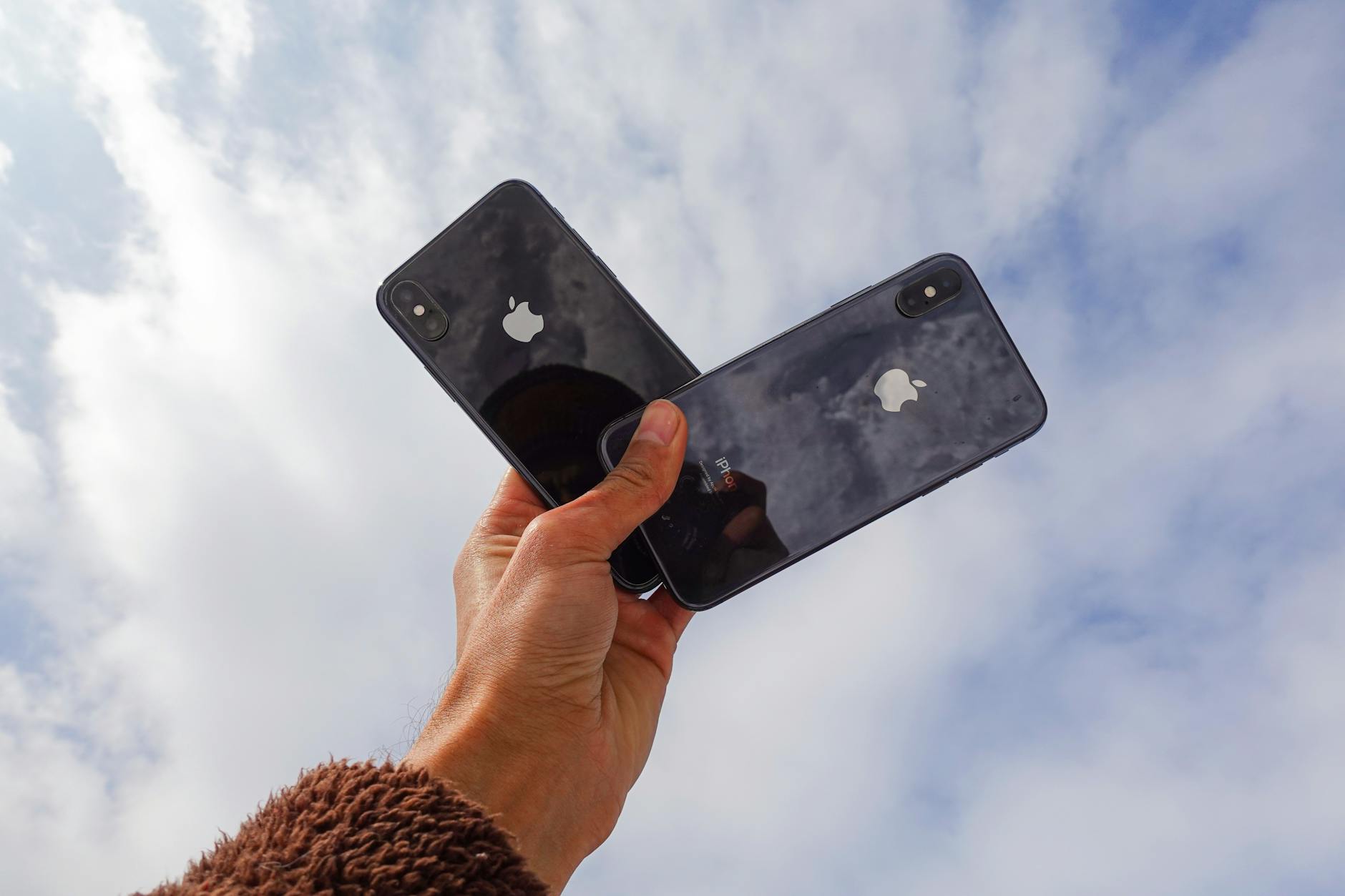
Real-world setup and actionable execution in practice
3. iPhone 18 Pro (Featuring 2nm A20 Pro Silicon)
While the base iPhone updates will continue on refined 3nm nodes, the flagship iPhone 18 Pro lineup will serve as the commercial launchpad for TSMC’s groundbreaking 2nm process technology.
- Key Summary & Flow: TSMC 2nm Process Node Architecture
- Compute Speed Boost: 15% to 18% over 3nm
- Power Efficiency Gain: 30% reduction in power consumption
- Unified Memory Base: Upgraded to 12GB across all Pro models
Key Engineering Specifications
- A20 Pro Chip Performance: The shift to 2nm allows the A20 Pro to deliver a 15% to 18% compute speed increase over prior 3nm architectures while operating at substantially lower temperatures.
- Power Efficiency: The 2nm node achieves a dramatic 30% power efficiency gain over the 3nm node, enabling noticeably longer battery life without increasing overall battery pack size.
- Memory & AI Bandwidth: Upgraded to 12GB of high-bandwidth unified RAM across the entire Pro lineup, allowing local AI models to stay permanently cached in system memory for instant responses.
Release Window & Pricing
Scheduled for Apple’s standard launch window in September 2026. Pricing is expected to hold at $999 USD (Pro) and $1,199 USD (Pro Max).
The Upgrade Verdict: HOLD OUT FOR THIS
If you own an iPhone 13, 14, or 15, skip the immediate incremental updates and hold out for the 2nm jump. The battery efficiency gains alone make the iPhone 18 Pro the most future-proof upgrade target in years.
4. Apple Glass: Lightweight AR Audio & HUD Wearable
Following the heavy, high-performance Vision Pro spatial computer, Apple is preparing a far lighter, consumer-focused wearable designed for daily outdoor use.
Key Engineering Specifications
- Display Technology: Dual micro-OLED heads-up displays (HUD) projected onto lightweight optical waveguides embedded directly inside normal-looking glass frames.
- Sensor Suite: Micro-cameras for spatial awareness and hand-gesture detection, paired with directional open-ear speakers for spatial audio.
- Offloaded Processing: Offloads heavy graphic computation wirelessly to your paired iPhone, dramatically lowering frame weight and reducing heat generation against your temples.
Release Window & Pricing
Targeted for a preview in Late 2026, with consumer shipments beginning in Early 2027. Estimated pricing: $799 to $999 USD.
The Upgrade Verdict: WAIT AND SEE
First-generation optical wearables face tough challenges with battery life in bright sunlight. Unless you are a developer or an avid early adopter, wait until real-world battery reviews come in.
5. M5 Silicon MacBook Pro & iPad Pro Refresh
Apple's custom M-series silicon continues its rapid evolution, with the M5 processor family focusing on hardware-accelerated neural matrix processing designed specifically for desktop local AI workloads.
Key Engineering Specifications
- M5 Architecture: Built on an enhanced 3nm process with architectural designs borrowed from the upcoming 2nm node, focusing heavily on Neural Engine throughput.
- Display & Chassis: Maintains the crisp Tandem OLED displays recently introduced in the iPad Pro line, bringing higher peak brightness and lower power draw to the 14-inch and 16-inch MacBook Pro models.
- Unified Memory: Base configurations are expected to jump to 24GB of Unified Memory to support complex, multi-modal AI models locally.
Release Window & Pricing
Expected rollouts span from Late 2025 (iPad Pro) to Early 2026 (MacBook Pro). Pricing will remain consistent with current M4 tier structures.
The Upgrade Verdict: BUY ONLY IF YOUR CURRENT MAC IS INTEL OR M1
If you are running an M2 Pro, M3, or M4 machine, the performance leap will not alter your day-to-day workflow enough to justify the cost. Owners of Intel-based Macs or early M1 models, however, will experience a massive leap in speed and battery life.
6. Apple Watch Ultra 3 & Next-Gen Health Sensors
Apple’s flagship adventure watch is slated for a core structural overhaul focused on display clarity and non-invasive health monitoring.
Key Engineering Specifications
- Display Upgrade: Transitioning to MicroLED display panels, delivering dramatically higher outdoor peak brightness, wider viewing angles, and lower display power draw.
- Health Hardware: Adds upgraded optical sensors capable of detecting early hypertension indicators and identifying potential sleep apnea patterns.
- Satellite Connectivity: Expanded satellite messaging capabilities allowing two-way SMS and location pinging outside of cellular coverage zones without emergency service activation.
Release Window & Pricing
Expected arrival in September 2025 priced at $799 USD.
The Upgrade Verdict: STRONG BUY FOR WATCH SERIES 6 AND OLDER
If you are wearing an original Apple Watch Ultra or a standard Series Watch older than three years, the Ultra 3 represents a major jump in battery capacity, outdoor legibility, and personal safety features.
Summary Matrix: Upcoming Apple Hardware at a Glance
| Product Name | Estimated Launch | Core Technical Innovation | Target Price Range | Immediate Upgrade Verdict |
|---|---|---|---|---|
| homeOS Smart Display | Spring 2025 | Dedicated homeOS, Matter/Thread native support | $199 - $299 | Strong Buy (Smart Home Hub) |
| Apple Watch Ultra 3 | September 2025 | MicroLED display, Hypertension detection | $799 | Buy (If upgrading from Series 6/7) |
| M5 MacBook Pro | Early 2026 | Next-gen Neural Engine, Tandem OLED | $1,599 - $2,499 | Skip (If on M2/M3/M4) |
| iPhone 18 Pro | September 2026 | TSMC 2nm A20 Pro, 30% power savings | $999 - $1,199 | Essential Upgrade |
| iPhone Fold | Late 2026 | 7.8" OLED, 4.5mm profile, liquid metal hinge | $2,000 - $2,500 | Skip 1st Gen (Unless Early Adopter) |
| Apple AR Glasses | Early 2027 | Dual micro-OLED HUD, offloaded processing | $799 - $999 | Wait for Real-World Reviews |
Practical Action Plan: How to Plan Your Upgrades Today
Navigating a hardware roadmap full of generational shifts requires a clear financial strategy. Here is a simple framework to guide your purchasing decisions over the next two years.
| STEP 1: Audit Current Battery & Silicon Nodes |
|---|
| - Devices on M2/A16 or newer? Hold for 2nm shift in 2026. |
| - Devices on Intel/M1/A14? Upgrade immediately to current gear. |
| STEP 2: Isolate Smart Home Needs |
| - Hold off buying third-party hubs; wait for homeOS in 2025. |
| STEP 3: Establish a "First-Gen Hardware" Rule |
| - Never allocate primary phone budget to 1st-gen foldables. |
Step 1: Audit Your Current Devices
Check the chip generation inside your current phone and computer. If you are running an A16 Pro or M2 processor or newer, your hardware has plenty of headroom. You can comfortably skip current retail options and hold out for the 2nm TSMC platform transition in late 2026.
If you are using an Intel-based Mac, an M1 laptop, or an iPhone 12/13, today's M4 and A17/A18 devices offer enough of a leap in speed and battery performance that upgrading now still makes complete practical sense.
Step 2: Hold Off on Third-Party Smart Home Controllers
If you plan to overhaul your home automation system, stop buying intermediate hubs or third-party wall mounts. Wait for the homeOS command center. It will consolidate Matter and Thread management into a single native hardware ecosystem, saving you money and setup frustration.
Step 3: Apply the "First-Generation Hardware Rule"
First-generation devices—especially foldables—frequently experience rapid iteration cycles in their second year. If you are drawn to the iPhone Fold, wait for early independent review feedback regarding screen durability and long-term battery performance before replacing your daily driver.
3 Costly Upgrade Mistakes to Avoid
1. Buying Premium 3nm Devices Right Before the 2nm Transition
Purchasing an incremental smartphone upgrade right before a major architectural node shift is one of the most common tech buying mistakes. The jump to TSMC's 2nm node promises a 30% boost in power efficiency. Buying an expensive 3nm flagship months before that shift means your phone will lose its trade-in value much faster.
2. Assuming On-Device AI Requires Brand-New Hardware
Do not fall into the trap of upgrading purely because of marketing claims around localized AI. While extra system memory helps, most everyday AI features function smoothly on existing M-series Macs and recent Pro iPhones. Upgrade for measurable battery gains and screen quality, not incremental software features.
3. Paying First-Gen Premiums for Foldables Without Heavy Care Plans
Foldable screens contain complex moving parts, thin glass, and specialized hinges. If you purchase the initial iPhone Fold, always factor in the cost of comprehensive damage protection. Repair costs for custom folding OLED displays can be extraordinarily high if damaged outside of coverage.
Frequently Asked Questions
Will the iPhone Fold replace the iPad Mini?
Yes, for many users it will. With a 7.8-inch internal folding display, the folded device sits comfortably in a pocket while opening up into a display surface almost identical in size to the iPad Mini. However, because of its expected $2,000+ price tag, the iPad Mini will remain Apple's budget-friendly compact tablet option.
Why is Apple switching to Touch ID for the foldable phone?
Achieving a slim 4.5mm unfolded thickness makes fitting the complex sensor array required for Face ID—including the dot projector and infrared camera—physically difficult without adding a thick bezel or screen notch. Integrating Touch ID into the power button solves the space problem while maintaining quick biometrics.
Will homeOS run on my current Apple TV or HomePod?
The underlying homeOS platform will manage back-end coordination across existing HomePods and Apple TVs via software updates. However, the interactive touch features, gesture recognition, and proximity UI are designed exclusively for the upcoming smart display hardware.
How much better will the 2nm A20 Pro chip be compared to current phones?
The transition to TSMC’s 2nm architecture yields a 30% reduction in power consumption at identical processing speeds, or a 15% to 18% improvement in raw compute performance. In practice, this means noticeably cooler operating temperatures during heavy use and longer battery life without making the phone heavier.
Reader Discussion
0No comments yet. Be the first to share your thoughts, strategic perspective, or feedback on this guide!
Post a Comment
Join the discussion. All constructive feedback and editorial insights are welcome.