

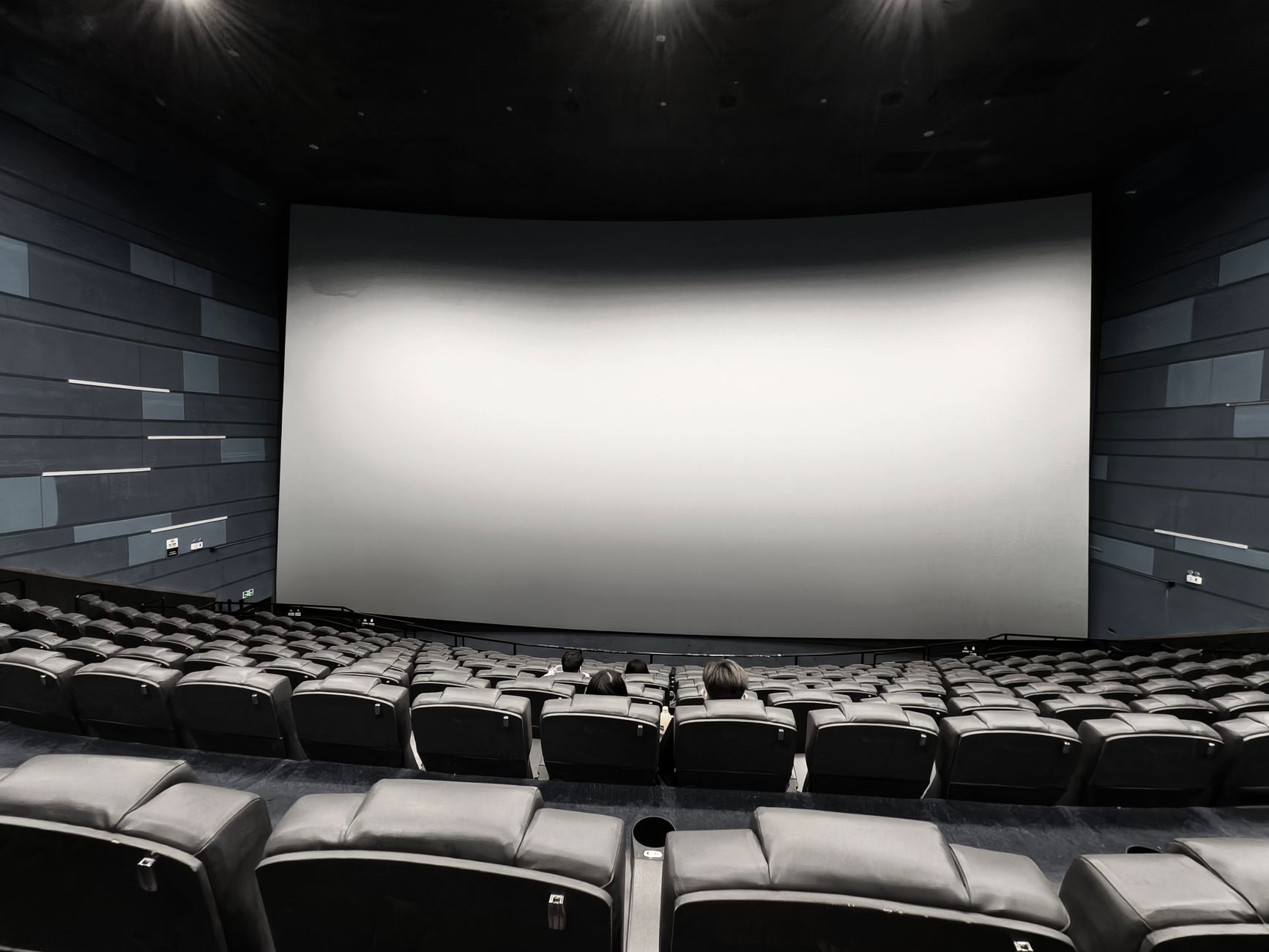
Two Star Wars films land in theaters in 2027, a little over three months apart, and only a few dozen screens on the planet can show either one the way it was built to be shown.
That single fact explains everything you're about to watch happen: the stressed refresh, the queue that sells out while you're still typing your password, the resale listing asking $300 for two seats.
Some of this is confirmed. Some of it isn't, and I'll be clear about which is which. Here's how to get yourself into position before the drops happen.
The Two 2027 Releases Are Not the Same Format Problem
Start here, because most coverage blends them together.
On February 19, 2027, Lucasfilm and Disney release the 50th Anniversary Restoration of the 1977 original. It arrives without the 1997 and 2004 CGI modifications, and without the "Episode IV: A New Hope" subtitle. This is a photochemical restoration of a film shot on film, formatted for IMAX 70mm (15/70) prints along with premier IMAX Laser auditoriums.
On May 28, 2027, *Star Wars: Starfighter* arrives, directed by Shawn Levy and starring Ryan Gosling, Mia Goth, Matt Smith, Amy Adams, and Aaron Pierre. It also got the IMAX 70mm and premier IMAX Laser treatment. But there's a catch that changes your venue decision entirely.
*Starfighter* was captured digitally, on IMAX-certified Sony CineAlta Venice 2 cameras at 8.6K resolution, then master-converted into physical IMAX 70mm 15-perforation film prints. The production's own technical record states it plainly:
- "Star Wars: Starfighter was captured digitally with IMAX-certified Sony CineAlta Venice 2 cameras in 8.6K resolution and master-converted into physical IMAX 70mm 15-perforation film prints."
Read that twice. The film print for *Starfighter* is a conversion. The digital master is the original. For the 1977 restoration, the relationship runs the other way.
That inversion is the single most useful thing you can carry into a presale — and the part most buyers skip.
Do the Venue Math Before You Fall in Love With a Format
IMAX Corporation's public venue disclosures put the worldwide count of functional IMAX 70mm screens at roughly 41. The count of IMAX Dual Laser (GT) screens supporting the full 1.43:1 aspect ratio sits at roughly 45.
Set those against the total number of movie screens on the planet and the ratio stops feeling abstract. You're competing for a seat in a room that may not exist within a day's drive of your house. Not every market has one. Some countries have none.
It gets harder than that. Demand doesn't spread across those venues evenly — it clusters. A handful of flagship locations in Los Angeles, New York, London, and a few other cities absorb an enormous share of the pressure, because those are the rooms people will actually travel for.
One detail tends to get lost in the counting itself: whether those two lists overlap, and by how much. I can't pin that down from the published figures, and some large-format sites may appear on both. That uncertainty matters if you're building a shortlist, because a venue that can do both formats gives you a second shot on the same trip.
What Each Format Actually Does
Four tiers. Treating them as interchangeable is the most common mistake people make.
IMAX 70mm (15/70 film). The analog path. The format's physical fidelity is cited at up to 18K theoretical visual resolution — a spec-sheet figure derived from the size of the frame, not a measurement of what lands on screen after a print has run for three weeks. It's the format the 1977 restoration was built for.
IMAX Dual Laser (GT). Around 45 screens worldwide project the full 1.43:1 frame digitally, with 12-channel spatial audio. For *Starfighter*, this is the native pipeline — an 8.6K digital capture displayed by a digital projector, with no film conversion step in between.
Multiplex IMAX Single Laser. These are the screens most people can actually get to. You get 1.90:1, which is 26% more picture height than a standard 2.39:1 widescreen presentation. That's a real improvement. It is also not 1.43:1, and no amount of marketing language changes the geometry.
Dolby Cinema. Published dynamic contrast ratio of 1,000,000:1, paired with Dolby Atmos spatial audio. Not an IMAX frame, and it won't carry the expanded aspect ratio. What it does offer is the highest contrast and a different audio architecture.
The misconception worth killing outright: plenty of moviegoers assume every IMAX-branded screen expands to 1.43:1. The Single Laser rooms in standard multiplexes don't. They expand to 1.90:1. If you buy a ticket expecting the full frame and get 1.90:1, nothing is broken — you bought a different product.
There's a related assumption that physical IMAX 70mm film is automatically the better choice. For a digitally captured film converted to a film print, that argument gets much weaker. Conversion introduces a step. Whether that step is visible is a separate question, and I'll come back to it.
A Practical Presale Playbook
Step 1: Decide which film you're buying for, then pick the format
The two titles point in opposite directions.
For the February 19, 2027 restoration of the 1977 original, IMAX 70mm is the match. You're chasing an analog print of an analog film, unmodified, in genuine 1.43:1.
For the May 28, 2027 premiere of *Starfighter*, IMAX Dual Laser is the cleaner call: native 8.6K digital capture, digital projection, 12-channel audio, no film conversion artifacts. If maximum contrast matters more to you, Dolby Cinema is the alternative — just know you're trading the expanded IMAX frame for it.
And if your local market only has Single Laser IMAX, buy it. A 26% gain in picture height is not nothing.
Step 2: Shortlist venues by hardware, not by brand name
Don't search "IMAX near me" and stop. Search for the specific projection system. Venues publish this.
The same way hardware generation bottlenecks force upgrade decisions on the consumer side, a theater's projector generation determines what it can physically display — and no software update fixes a second-generation light engine.
Build a list of three to five venues, ranked. Include one long shot.
Step 3: Set up your accounts before the drop
Least glamorous step. Also the one that costs people tickets. Create or verify your accounts with every chain on your shortlist now. Save payment methods. Confirm your billing address matches. Log in the day before to make sure nothing has expired.
Presales for events this scarce sell out in minutes, and a password reset screen is how people lose seats.
Step 4: Handle the time zone question early
The exact drop date and hour for these presales hasn't been announced by the major exhibition chains at the time of writing. That's a real gap, not a hedge.
What you can do is prepare for the pattern. Premium-format drops tend to go live on a single national or global clock, which means buyers in some markets are setting alarms for 3 a.m. If you've ever planned around a live broadcast schedule across time zones, you already know the drill — check what time the clock actually converts to, not what you assume it does.
Step 5: Understand that demand gets modeled before you see it
Ticket allocation for events this large is increasingly shaped by predictive models that forecast prime-time demand — which screens get which showtimes, how many premium-format slots get reserved, and when.
The practical consequence for you: showtimes can appear in waves rather than all at once. A sold-out 7 p.m. slot doesn't mean the format is gone. Check back.
Step 6: Buy center, not "best available"
Seat geometry in a 1.43:1 auditorium is different from a standard house. The image is much taller, so the sweet spot sits farther back and closer to the horizontal centerline than most people expect. Rows that feel ideal in a 1.90:1 room can put you too close to a very tall frame.
If the seat map offers a center block in the middle third of the room, that's your target. Take it over a side seat in a more premium row.
Step 7: Rank your fallbacks before you're under pressure
Write your order down. Venue one, center block. Venue two, center block. Venue one, rear center. Venue three, anything.
Decision fatigue at 3 a.m. on a checkout screen is how people end up with four single seats in separate rows.
The Counter-View: Is the Premium Chase Worth It?
Here's an argument I've heard from working exhibitors, and it deserves a fair hearing rather than a dismissal.
The case for skipping the scramble: the pool of full-expansion venues is tiny, travel costs are real, and analog projection carries operational risk. A 15/70 print is a physical object. It can pick up dust, it can jam, and it degrades over a long high-demand run in a way a laser projector simply doesn't.
Meanwhile, a well-run Single Laser room with a properly calibrated screen and a good seat will deliver a genuinely excellent two hours.
There's a second version of the argument, about marginal returns. The 18K figure for IMAX 70mm is theoretical, tied to frame area. Whether an individual viewer perceives a meaningful difference between that and a clean 8.6K digital presentation depends on the screen, the print's condition that week, and the seat.
I can't resolve that with the evidence available. What I can say is that the trade-off is real rather than imagined — and it's why this guide separates the two 2027 titles instead of crowning one format as the winner.
The other side of the argument holds too. For the 1977 restoration, the whole point of the release is the unmodified analog presentation. If you care about seeing that specific artifact, no digital alternative substitutes for it.
Where This Leaves You
The drop dates aren't public, the venue maps aren't final, and the two films you're chasing reward opposite decisions. That isn't paralysis. It's a to-do list.
Build your shortlist now, while the pressure is zero. Verify the accounts, save the cards, rank the fallbacks, write the seat plan down on paper. When the timer goes live, you want to be executing a decision you already made — not making one with a countdown running.
Because the one thing you can count on is this: a few dozen rooms, several million people who want in, and a window measured in minutes.
Key Uncertainties and Open Questions
Presale timing is unannounced. The exact day and hour of ticket drops from the major exhibition chains remains unspecified. Anything you read that gives a precise timestamp should be treated with suspicion unless it comes from the chain itself. Timeline projections on events like this tend to shift as dates firm up, and this one hasn't.
Venue participation isn't guaranteed for both titles. Both releases have been confirmed for IMAX 70mm and premier IMAX Laser formats. Which specific screens run which title, and for how long, hasn't been detailed.
The overlap between the ~41 and ~45 venue counts is unclear. If there's substantial overlap, the effective number of full-expansion rooms is smaller than the two figures suggest when added.
Analog print condition across a long run is variable. A 15/70 print on opening night and the same print three weeks in are not identical experiences. This isn't a reason to avoid the format. It is a reason to book early if you're booking for the format specifically.
The 18K resolution figure is theoretical. It describes frame capacity, not measured on-screen output. Treat it as a specification, not a promise.
Viewer preference is not resolvable by spec sheet. The trade-off between physical 15/70mm analog texture and Dual Laser 8.6K sharpness comes down to what a given person values. I'd flag that as an open question rather than pick a side.
One more gap worth naming: no on-record comment from IMAX, Disney, or the major exhibition chains was available to clarify presale mechanics at the time of writing. That's a limitation of this guide, not a small one.
Key Takeaways
- The February 19, 2027 restoration of the 1977 original was built for IMAX 70mm. The May 28, 2027 release of *Star Wars: Starfighter* was captured digitally at 8.6K and converted to film, which makes IMAX Dual Laser the native presentation.
- Roughly 41 IMAX 70mm screens and roughly 45 IMAX Dual Laser screens exist worldwide. That scarcity drives everything about how these presales will behave.
- Multiplex Single Laser IMAX expands to 1.90:1, which is 26% more picture height than standard widescreen — but it is not the full 1.43:1 frame.
- Set up accounts, payment methods, and a ranked fallback list before any drop date is announced. Presale windows for premium formats this limited are measured in minutes.
- Analog projection carries real operational risk that digital doesn't. That's a trade-off to weigh, not a reason to dismiss the format.
FAQ
How do I choose the best screen format for the 2027 Star Wars releases?
For the 1977 restored original, choose IMAX 70mm for authentic 1.43:1 analog film grain. For *Star Wars: Starfighter*, choose IMAX Dual Laser for pristine native 8.6K digital clarity in full 1.43:1, or Dolby Cinema for maximum contrast with 1,000,000:1 dynamic range and Dolby Atmos audio.
When do Star Wars 2027 IMAX tickets go on sale?
The exact dates and times haven't been announced by the major exhibition chains at the time of writing. Both releases are confirmed for IMAX 70mm and premier IMAX Laser formats, which means presale windows are likely to be short and tightly allocated.
Is Star Wars: Starfighter shot on film or digital?
Digital. It was captured with IMAX-certified Sony CineAlta Venice 2 cameras at 8.6K resolution, then master-converted into physical IMAX 70mm 15-perforation film prints for venues that project film.
Which is better for the 1977 restoration — IMAX 70mm or IMAX Dual Laser?
IMAX 70mm. The restoration is an unmodified analog presentation of a film shot on film, and the 15/70 print is the format it was prepared for. Dual Laser remains a strong alternative if no film venue is reachable.
How many IMAX 70mm screens are there worldwide?
Roughly 41 functional IMAX 70mm screens, according to IMAX Corporation's public venue disclosures, alongside roughly 45 IMAX Dual Laser screens supporting the full 1.43:1 aspect ratio.


