


If you want to catch the Northern Lights tonight, you need three factors working in your favor: unobscured dark skies facing north, an active solar cloud striking Earth's magnetic shield, and an accurate knowledge of the geomagnetic intensity required for your specific latitude.
High-latitude regions like Alaska or northern Minnesota can witness sweeping displays during quiet conditions requiring a Planetary K-index (Kp) of just 3 to 4. However, mid-latitude residents in states like Pennsylvania, Oregon, or Iowa need strong geomagnetic storms reaching Kp 7 or 8 (G3 to G4 storm levels) to see the horizon glow.
- Key Summary & Flow: AURORA VISIBILITY BY TIER
- TIER 1 (Kp 3 4): AK, Northern MN, Upper MI, Northern ME
- TIER 2 (Kp 5 6): WA, ID, MT, ND, SD, WI, VT, NH, Upstate NY
- TIER 3 (Kp 7 8): OR, WY, NE, IA, IL, IN, OH, PA
The Core Context: Why Solar Cycle 25 Is Our Golden Window
We are currently living through a extraordinary era for aurora viewing. Sunspot activity follows an eleven-year solar cycle, and Solar Cycle 25 reached its peak Solar Maximum phase between 2024 and 2026. During this solar maximum, the sun frequently hurls massive eruptions of charged plasma—known as Coronal Mass Ejections (CMEs)—directly toward Earth.
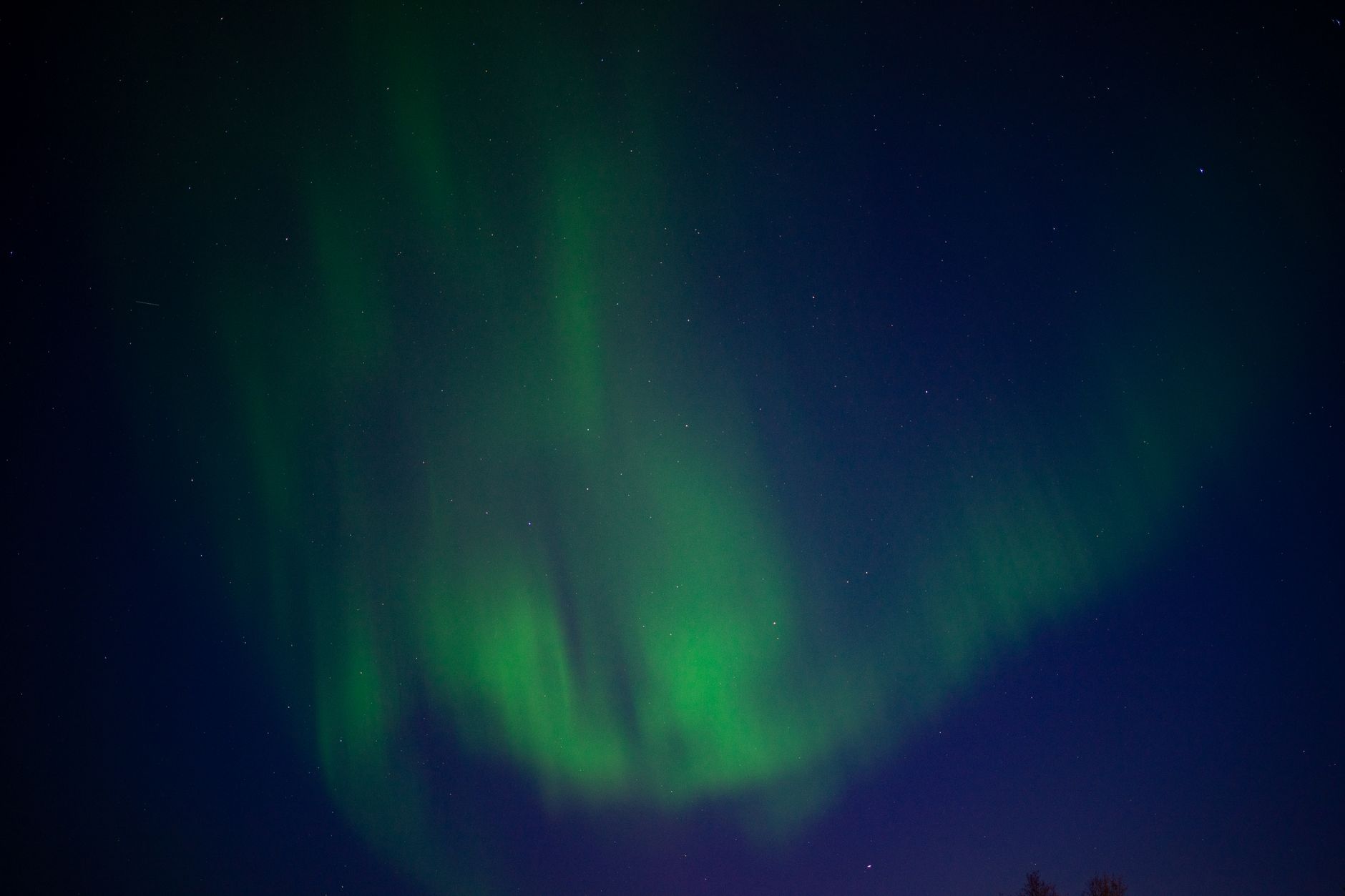
When these solar particles collide with our planet's magnetosphere, they spark chemical reactions with atmospheric gases. Nitrogen emits deep purple and crimson hues, while oxygen glows in iconic neon greens and rare high-altitude reds.
Key Summary & Flow: SOLAR ERUPTION EARTH IMPACT AURORA CREATION → [Sun: CME Release] > [3 Day Transit Across Space] > [Magnetosphere Glow]
The scale of this current cycle became undeniable during the historic May 10–12, 2024 geomagnetic storm. That event reached peak G5 intensity (Kp 9)—the highest level on the space weather scale—and produced visible auroras across all 50 U.S. states, delighting millions who had never seen the lights in their lives.
While G5 storms happen only a few times per decade, lower-tier geomagnetic events happen regularly during Solar Maximum. NOAA G1 to G2 storm levels (Kp 5 to 6) routinely push visible display lines down into Tier 2 states across the northern border. Knowing your local threshold means you will never miss the sudden arrival of a solar wave.
Core conceptual framework and workflow breakdown for How to See the Northern Lights Tonight: 20-State Aurora Forecast & Viewing Guide
Decoding Space Weather: The Kp Index Demystified
Space weather forecasters measure geomagnetic disturbance using the Planetary K-index, a logarithmic scale running from 0 (complete calm) to 9 (extreme planetary storm). Because the scale is logarithmic, a jump from Kp 5 to Kp 6 represents a significant surge in energy and geographic reach.
- Key Summary & Flow: Kp Index Scale (0 9)
- 0 1 2 3 4 5 6 7 8 9
- [ Quiet Sky ] [ Minor ] [ Moderate ] [ Strong/Extreme ]
- (Tier 1) (Tier 2) (Tier 3)
To plan your trip outside tonight, cross-reference your location with the required geomagnetic threshold below.
| Location Tier | Example States | Required Kp Level | NOAA Storm Rating | Naked-Eye Horizon Expectation |
|---|---|---|---|---|
| Tier 1 (High Latitude) | Alaska, Northern MN, Upper MI, Northern ME | Kp 3 – Kp 4 | Quiet to Unsettled | Green pillars visible high overhead; vibrant motion. |
| Tier 2 (Northern Border) | WA, ID, MT, ND, SD, WI, VT, NH, Upstate NY | Kp 5 – Kp 6 | G1 (Minor) to G2 (Moderate) | Distinct green or grey arc low on the northern horizon. |
| Tier 3 (Mid-Latitude) | OR, WY, NE, IA, IL, IN, OH, PA | Kp 7 – Kp 8 | G3 (Strong) to G4 (Severe) | Faint crimson/grey ribbons visible to the naked eye; vibrant on camera. |
| Tier 4 (Low-Latitude) | CA, NV, UT, CO, KS, MO, KY, VA | Kp 9 | G5 (Extreme) | Deep magenta or red light blooming high into the sky. |
The 20-State Northern Lights Threshold Guide
Knowing whether the lights will reach your backyard comes down to geography and latitude. Below is the precise threshold breakdown for twenty key northern and mid-latitude U.S. states where auroras appear during elevated solar conditions.
Tier 1 States (Kp 3 to Kp 4 Required)
- Alaska: Fairbanks and Utqiaġvik offer front-row seats even during baseline Kp 2 or 3 conditions.
- Minnesota: The Boundary Waters Canoe Area Wilderness offers dark skies where a simple Kp 3 brings overhead rays.
- Michigan: The Upper Peninsula—especially along Lake Superior’s southern shore—frequently catches bright ribbons at Kp 4.
- Maine: Aroostook County’s remote farmland provides unobstructed views for minor Kp 4 events.
Tier 2 States (Kp 5 to Kp 6 Required)
- Washington: Lake Chelan and the North Cascades light up when NOAA issues G1 or G2 warnings (Kp 5+).
- Idaho: The Idaho Panhandle and Priest Lake sit far enough north to capture horizon light at Kp 5.
- Montana: Flathead Lake and Glacier National Park boast world-class dark sky conditions at Kp 5.
- North Dakota: Wide prairie vistas make places like Theodore Roosevelt National Park ideal for Kp 5 storms.
- South Dakota: The Black Hills and northern plains show distinct horizon beams at Kp 6.
- Wisconsin: Door County and Washington Island offer dark northern horizons over Lake Michigan at Kp 5–6.
- Upstate New York: The Adirondack Mountains offer elevated vantage points away from city glow during Kp 6 events.
- Vermont: The Northeast Kingdom provides dark valleys that reveal northern glows during G2 storms.
- New Hampshire: The White Mountains offer high elevation vistas looking north toward Canada at Kp 6.
Tier 3 States (Kp 7 to Kp 8 Required)
- Oregon: Coastal beaches and the Columbia River Gorge reveal faint arcs during G3 storms (Kp 7).
- Wyoming: Grand Teton National Park and rural northern plains capture light displays at Kp 7.
- Iowa: Rural farm roads away from Des Moines offer dark northern horizons for Kp 7–8 events.
- Nebraska: The Sandhills region provides dark skies ideal for spotting distant G3 storm activity.
- Illinois: The far northern counties near the Wisconsin border can photograph pillars during Kp 8 events.
- Ohio: The shores of Lake Erie looking north toward Canada capture glowing skies during strong Kp 8 storms.
- Pennsylvania: Cherry Springs State Park provides dark sky conditions capable of revealing Kp 7–8 storms clearly.

Real-world setup and actionable execution in practice
Naked Eye vs. Camera Lens: Managing Expectations
One of the biggest causes of disappointment for first-time observers is the gap between expectations and reality. Photos online reveal brilliant emerald curtains and magenta ribbons, but human physiology processes night light very differently than a camera sensor.
HUMAN EYE VS. CAMERA SENSOR
HUMAN EYE (Real-Time) CAMERA (Long Exposure)
- Uses Rod Cells (Monochrome) - Accumulates Light Over 3-10s
- Appears as Milky Grey Haze - Uncovers Hidden Emeralds & Pinks
- Sees Motion, Misses Color - Captures Deep Color Saturation
At night, human vision relies heavily on rod cells within the retina. Rods are sensitive to low light, but they cannot register color.
Unless a geomagnetic storm is exceptionally strong (Kp 8 or higher), the aurora often appears to the naked eye as a milky white, glowing cloud or tall grey fog bank on the northern horizon. You may notice structure—such as vertical beams or pulsating curtains—without seeing deep colors.
- Key Summary & Flow: NIGHT SKY VIEWING COMPARISON
- Feature Naked Eye Perception Camera Sensor
- Color Saturation Low (Grey / Pale Green) High (Vibrant Green)
- Exposure Time Instant (1/30 second) Extended (3–10 sec)
- Structural Detail Pillars, Faint Rays Sharp Beams, Layers
- Faint Light Sensitivity Low Exceptional
Your smartphone camera, however, works differently. By holding the lens open for three to ten seconds, the camera sensor collects photons continuously, exposing vivid emerald greens and pink hues that were invisible to your naked eyes.
When searching the northern horizon tonight, always use your phone’s camera to scan the dark sky first. If your camera screen reveals a bright green layer low on the horizon, you are looking at the aurora.
Actionable Step-by-Step Playbook: Catching the Aurora Tonight
To maximize your chances of witnessing a display tonight, execute this step-by-step strategy.
1. Monitor Real-Time Space Weather Data
Do not rely solely on 24-hour baseline forecasts. Space weather moves fast, and solar wind conditions can shift in minutes.
- Check the DSCOVR Satellite Data: Look at the Bz vector of the Interplanetary Magnetic Field (IMF). For an aurora to blossom, the Bz must tilt southward (negative). A strong negative Bz (e.g., -10 nT to -20 nT) opens Earth's magnetic shield and allows solar energy in.
- Track Hemispheric Power: Expressed in gigawatts (GW), this measures total energy pouring into the upper atmosphere. Values above 50 GW suggest active northern displays; values above 100 GW indicate strong mid-latitude visibility.
2. Find Light-Pollution-Free Northern Vistas
Light pollution from streetlights and urban sprawl will wash out faint auroral light instantly.
- Key Summary & Flow: OPTIMAL VIEWING SPOT
- [City Lights] > [Drive 30 45 Mins North] > [Dark Field / Lake Shore]
- (Light Washout) (Clear Northern Horizon)
- Drive to a location with a Bortle Dark Sky Scale rating of 4 or lower.
- Position yourself on the south shore of a lake or at the southern edge of an open field. You need a completely unobstructed, dark view directly facing north.
- Ensure no nearby towns sit within 15 miles directly north of your position.
3. Configure Your Smartphone Camera
You do not need expensive photography gear to record the display. Modern smartphones handle low-light photography remarkably well if configured correctly.
- Mount or Steady Your Device: Lean your phone against a solid object or mount it to a light tripod. Any hand movement during a long exposure blurs the image.
- Enable Night Mode: Set the exposure time manually to 3 to 10 seconds.
- Turn Off the Flash and Focus Manually: Tap a distant light or star on your screen to force the camera focus to infinity.
- Use Exposure Compensation: Dial the light slider down slightly so the sky stays rich and dark while bright auroral pillars stand out clearly.
- Key Summary & Flow: SMARTPHONE OPTIMAL CAMERA SETTINGS
- Setting Target Value / Mode
- Shooting Mode Night Mode / Pro Manual Mode
- Exposure Time 3 to 10 Seconds (Tripod Mounted)
- Focus Fixed at Infinity (Tap distant star)
- Flash Disabled
- Timer 2 Second Delay (Prevents shake on button press)
4. Time Your Hunt Strategy
- Peak Human Window: Auroras peak around magnetic midnight—typically between 10:00 PM and 2:00 AM local time. This occurs when your location sits at its deepest point within Earth's magnetic shadow.
- Let Your Eyes Adapt: Turn off your vehicle headlights and interior lights. Allow your eyes 15 to 20 minutes to adjust to complete darkness. Avoid looking at bright phone screens without a red light filter, as white light resets your night vision instantly.
Honest Pitfalls to Avoid
Even experienced night-sky photographers get skunked by simple oversights. Avoid these common missteps when heading out tonight:
- Expecting Neon Colors Without Digital Help: If you wait around for glowing green curtains like those shown in television documentaries, you might walk right past a real display. Look for tall, quiet grey beams or a glowing white haze hovering low over the horizon, then verify it with a quick phone picture.
- Looking in the Wrong Direction: It sounds obvious, but many observers pull into a dark pullout and scan directly overhead or toward the east. Unless the storm is at a peak Kp 8 level, the display will start low on the northern horizon. Bring a compass or use your phone's navigation app to orient yourself.
- Ignoring the Moon Phase: A full moon illuminates the sky with light, washing out delicate auroral structures. If the moon is bright, position yourself so a hill, stand of trees, or structure blocks the moonlight from hitting your eye or camera lens.
- Quitting Too Early: Geomagnetism moves in pulsating waves called substorms. Sky conditions can change from pitch dark to dynamic green ribbons in under five minutes, only to quiet down again a half-hour later. Stay patient and monitor real-time tracking apps before calling it a night.
Frequently Asked Questions
Can I really see auroras through a phone camera if I can't see them with my naked eye?
Yes. Modern smartphone sensors gather light over several seconds and process faint colors that human rod cells miss completely. In lower mid-latitude states, a display often looks like faint grey haze to the naked eye while registering as brilliant green on camera screens.
What does a negative "Bz" mean, and why do aurora chasers track it?
The Bz is the vertical directional vector of the magnetic field carried by the solar wind. When the Bz tilts southward (negative), it links up with Earth's magnetic field, which points north. This alignment acts like opening an energy valve, letting solar particles flood into our upper atmosphere and ignite vibrant displays.
How long does an aurora display last?
A geomagnetic storm can stretch across several hours or days, but peak visibility comes in dynamic bursts called substorms. These intense bursts usually last between 15 and 45 minutes before fading into a quiet glow. A single night often brings multiple substorms spaced an hour or two apart.
Is it worth driving out if the forecast predicts a Kp 4 in a mid-latitude state like Iowa or Pennsylvania?
No. A Kp 4 event rarely pushes auroras far enough south to reach lower mid-latitude states like Iowa, Pennsylvania, or Ohio. If you live in those states, save your energy and fuel for confirmed forecasts predicting Kp 7 or higher (G3+ storm conditions).
Reader Discussion
0No comments yet. Be the first to share your thoughts, strategic perspective, or feedback on this guide!
Post a Comment
Join the discussion. All constructive feedback and editorial insights are welcome.