

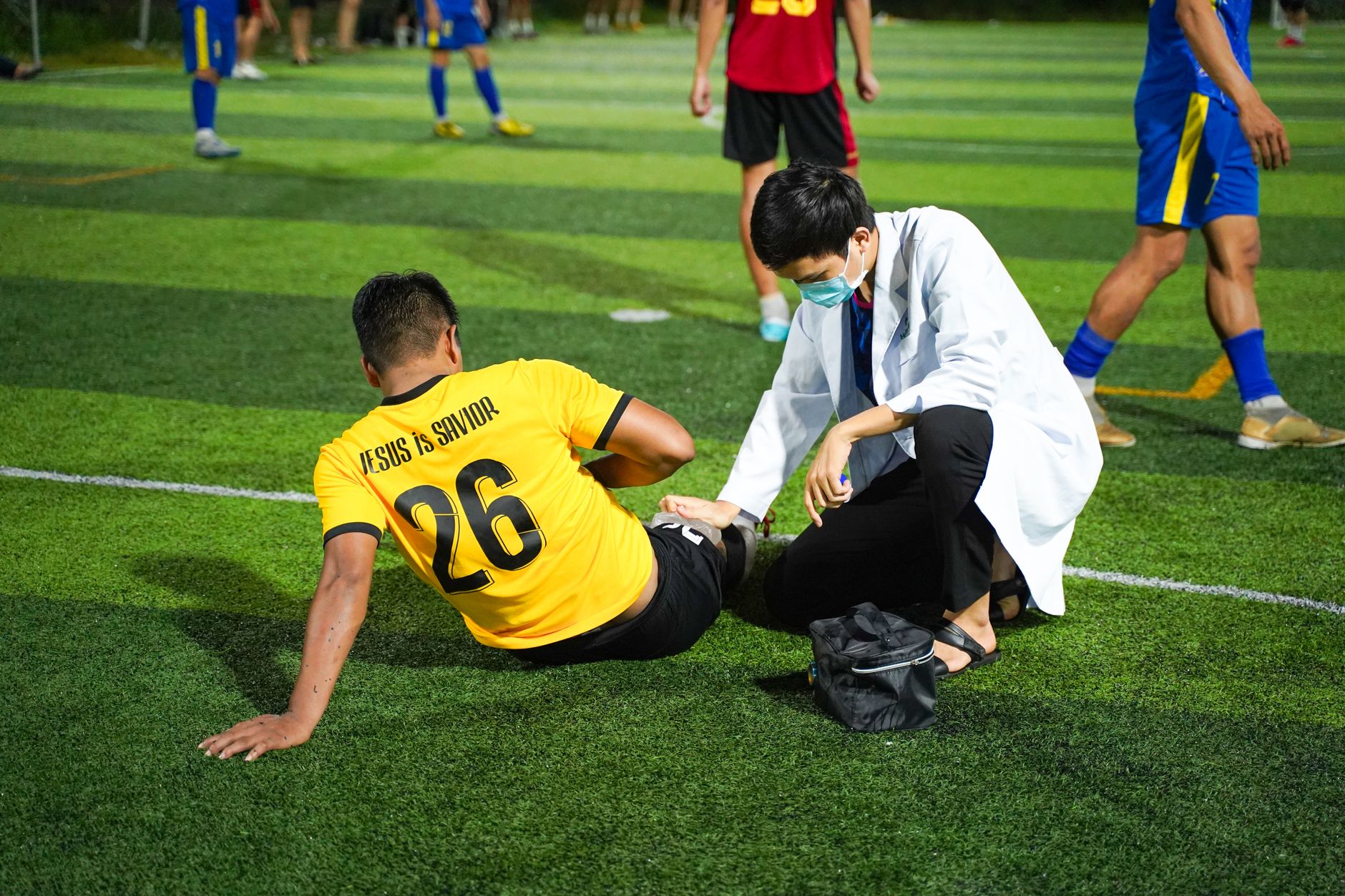
Picture the back half of a Sunday morning wave. A racer comes off the sled push, doubles over near the Roxzone, and a Race Director is already walking toward them, radio in hand.
Ninety seconds from now, that athlete will be a finisher, a DNF, or a DQ. To the person wearing the bib, those three words are not remotely the same thing.
The Short Answer on HYROX Medical Stoppage
If you want the clean version before the nuance: under HYROX Rule Section 6.2, a Race Director can withdraw a racer from competition when bodily fluids — blood, vomit, urine, or feces — create a welfare or contamination risk. The withdrawal is logged as a Did Not Finish, not a Disqualification.
That's the paragraph most people came for. The working version takes longer, because the rule sits exactly where athlete safety and racing flow meet — and those two don't always cooperate on event day.
What the Updated Rulebooks Actually Changed
HYROX rewrote its official Competition Rulebooks across four categories: Singles, Doubles, Relays, and Adaptive. Each now carries standardized medical pull parameters and biocontaminant procedures, so the same Section 6.2 language governs an elite singles heat and a mixed relay at the tail end of the day.
Covering all four sounds like paperwork. It isn't. Relays and Doubles complicate the picture in ways Singles never does, because pulling one athlete affects teammates who may still be out on course.
The rulebooks standardize the pull itself. How team entries absorb that consequence is a detail the published materials don't spell out, and I'd rather flag it than guess.
Then there's the scenario Race Directors actually train for. Mid-competition, across a live multi-wave event, an RD spots an athlete dealing with severe GI contamination: the RD pulls them immediately, logs a DNF, isolates the affected station, and enforces the venue SOP to swap modular carpet tiles before the next heat goes off.
Five moving parts, one decision, and a clock running the whole time.
The Weekend That Forced the Rewrite
The catalyst dates are specific. Following the September 12–13, 2026 Beijing event, HYROX co-founders Moritz Fürste and Christian Toetzke publicly apologized and acknowledged organizational oversights regarding athlete safety. The executive policy response window ran September 13 to 15, 2026. Three days from public acknowledgment to published policy.
What we don't have is the full incident record. The internal review that shaped the rulebook language isn't public, which means connecting Beijing directly to Section 6.2 is a reasonable inference, not a documented chain of causation. That distinction matters if you want to know whether this is a permanent structural change or a fast reaction to a bad weekend.
Here's the rule's substance, as published:
- "Race Directors are authorized to withdraw racers if bodily fluids including blood, vomit, urine, or faeces present welfare or contamination risks."
- HYROX Competition Rulebook, Section 6.2
Note where the authority sits. Not a medical tent. Not a volunteer. The Race Director, on the floor, in real time.
DNF Is Not a DQ, and the Difference Isn't Cosmetic
This is the misconception that trips up the most athletes, and it's worth slowing down for.
A Disqualification is punitive. It says you broke a rule, and it attaches to your record as a violation. A Did Not Finish under Section 6.2 is neither of those things. It's an administrative outcome that keeps an athletic record clean while a health and hygiene problem gets resolved — which is precisely why HYROX files medical withdrawals as DNF rather than DQ.
Why does the label carry so much weight? Because race results follow athletes around. They get screenshotted, shared, compared against season goals. A DQ invites a question about conduct. A DNF invites a question about the day. Different conversations entirely.
Whether the distinction holds up in practice is less clear. The published materials don't describe how a Section 6.2 DNF interacts with season standings, qualification pathways, or age-group ranking. That's a gap, not a scandal — but it's one athletes will notice the first time it lands on them personally.
The Logistics Nobody Trains For
Sanitizing a HYROX venue mid-competition is harder than it sounds. The standard race format is 8 kilometers of running split into 1-kilometer intervals, paired with 8 functional workout stations, all monitored through dedicated Roxzone safety stations. That's a lot of shared surfaces and a lot of people rotating through them.
The friction points named in event operations are specific: SkiErg handles, Wall Balls, Sled Ropes, and the modular turf or carpet underfoot. Swapping carpet tiles between heats is a venue standard operating procedure. It's also the kind of task that looks trivial on a run sheet and eats real minutes on a competition floor.
So the operational question isn't whether sanitation matters. Everyone agrees it does. The question is what happens to the heat behind you while a lane sits dark and a crew pulls tiles.
Safe Sport: The Harassment Ban Sitting Beside the Medical Rule
In the same policy window, HYROX implemented a zero-tolerance safe sport policy enforcing permanent lifetime bans for anyone engaging in threats or harassment against athletes, online or in person.
Read those two policies side by side and a pattern starts to show. One protects athletes from biological risk on the course. The other protects them from what happens after a public medical decision. Pulled athletes become visible athletes — they show up in results, in photos, in the crowd's line of sight.
I'd be careful about drawing a tight causal line, though. The record confirms both policies arrived together. It doesn't confirm that online abuse of a specific athlete drove the harassment ban. Treating the two as obviously linked is speculation.
The Counter-View Worth Taking Seriously
Not everyone reads expanded Race Director authority as a clean win. A legitimate dissenting argument runs like this: Section 6.2 gives one official, on the floor, mid-event, unilateral power to end your race — and the published materials don't describe a formal appeals route or a second medical opinion requirement.
The fairness objection gets sharper still. If a lane pauses for carpet replacement, racers sharing that course segment absorb a disruption they didn't cause and can't control. Their splits move. Their day changes.
Set against that, the case for the rule is straightforward and hard to argue with. Blood, vomit, urine, and feces on shared apparatus in a mass-participation indoor venue are not a gray area. Someone has to hold the authority to stop it, and "we'll convene a panel later" doesn't work when the next heat goes off in four minutes.
Both things can be true. That's usually where real event operations live.
There's a reasonable, if intermediate, resolution implied by the published policy: the trigger for a pull concerns contamination and welfare, not performance. You don't get withdrawn for being slow. You get withdrawn for being a hazard to yourself or to the person behind you. Whether that framing survives contact with a packed wave and a tired Race Director is a separate question — one the rulebook text alone can't answer.
Key Uncertainties and Open Questions
The biggest unknown is the one event operators raise first: the practical trade-off, and the exact event-day threshold, between pausing a lane for carpet sanitization and keeping racing flow moving during packed mass-participation waves. As of the published materials, no numerical threshold is specified.
Several other things remain genuinely unresolved:
- Where the decision line sits. No published decision tree explains when a Race Director isolates a station versus pauses a full lane versus lets the wave continue.
- How often pulls actually happen. No public dataset on Section 6.2 withdrawal frequency was available for this piece, so any claim about how common medical stoppages are would be a guess.
- What happens to relay teammates. The rulebook update covers Relays and Adaptive categories, but the athlete-facing consequence for the rest of a team entry isn't described in the materials reviewed.
- Whether appeals exist. The absence of a documented appeal process in these materials isn't proof that none exists. It's an absence of information, and I'm treating it that way.
- The Beijing incident detail. The co-founders' acknowledgment is on record. The underlying incident documentation isn't, so the causal link to specific rule text stays inferred.
That's a fair amount of uncertainty for a rule that governs whether someone's race ends. It's also the honest state of the public record right now.
What Racers Can Actually Plan Around
Not advice so much as orientation. Know that the authority to end your race rests with the Race Director, not with you — and that it can be exercised even if you feel perfectly capable of continuing. Know that the outcome is a DNF on the leaderboard, not a DQ. Know that Roxzone safety stations and station isolation are baked into the operating model, which means a stalled lane near you may well be procedure rather than chaos.
And if you're racing Doubles or Relays, the teammate consequence of a medical pull is a question worth asking your event organizer before race week, not after.
For readers who track how elite athletes handle scrutiny and physical durability across sports, the broader context is worth a look. The George Chuvalo iron chin legacy piece is a useful reminder that durability narratives and athlete welfare conversations have never sat easily together. The same tension shows up in team sport, as in this breakdown of Caitlin Clark and Angel Reese under FIBA-level pressure, where visibility and performance expectations collide.
The Question Still Open
Section 6.2 answers a narrow question well: when does a racer come off the course? It leaves a wider one untouched. Can a mass-participation indoor race protect competitive integrity and hygiene standards inside the same wave? And when those two pull against each other, who on that floor is authorized to say which one wins?
Key Takeaways
- Section 6.2 lets a Race Director withdraw any racer whose blood, vomit, urine, or feces pose a welfare or contamination risk.
- That withdrawal is logged as a DNF, not a DQ — non-punitive, with the record left clean.
- The updated rulebooks apply the same parameters across Singles, Doubles, Relays, and Adaptive.
- The rewrite followed the September 12–13, 2026 Beijing event; co-founders Moritz Fürste and Christian Toetzke apologized, with the policy window closing September 13–15, 2026.
- A concurrent safe sport policy imposes lifetime bans for threats or harassment against athletes.
- Still unanswered: when to pause a lane for sanitization versus keep a packed heat moving. No published threshold exists.
FAQ
What is the HYROX medical stoppage rule for biocontaminants?
Section 6.2 authorizes Race Directors to pull an athlete if blood, vomit, urine, or feces present a contamination risk. The athlete receives a DNF, not a DQ — protecting health and hygiene without branding them a rules violator.
Does a medical stoppage count as a disqualification on my record?
No. Medical withdrawals are registered as DNF rather than DQ. The distinction is non-punitive versus punitive.
Can I keep racing if I feel fine but a Race Director pulls me?
Section 6.2 grants the withdrawal authority to the Race Director, not the athlete. The trigger described in the rule concerns contamination and welfare risk.
Which HYROX categories does the updated medical pull protocol cover?
Singles, Doubles, Relays, and Adaptive — all carrying standardized medical pull parameters and biocontaminant procedures.
What happens to the station after an athlete is pulled?
The affected station is isolated, and the venue standard operating procedure swaps modular carpet tiles before the next heat begins.
Do team entries get any adjustment if one member is medically withdrawn?
The published materials reviewed don't describe the teammate consequence for Doubles or Relay entries. That remains an open question.


