

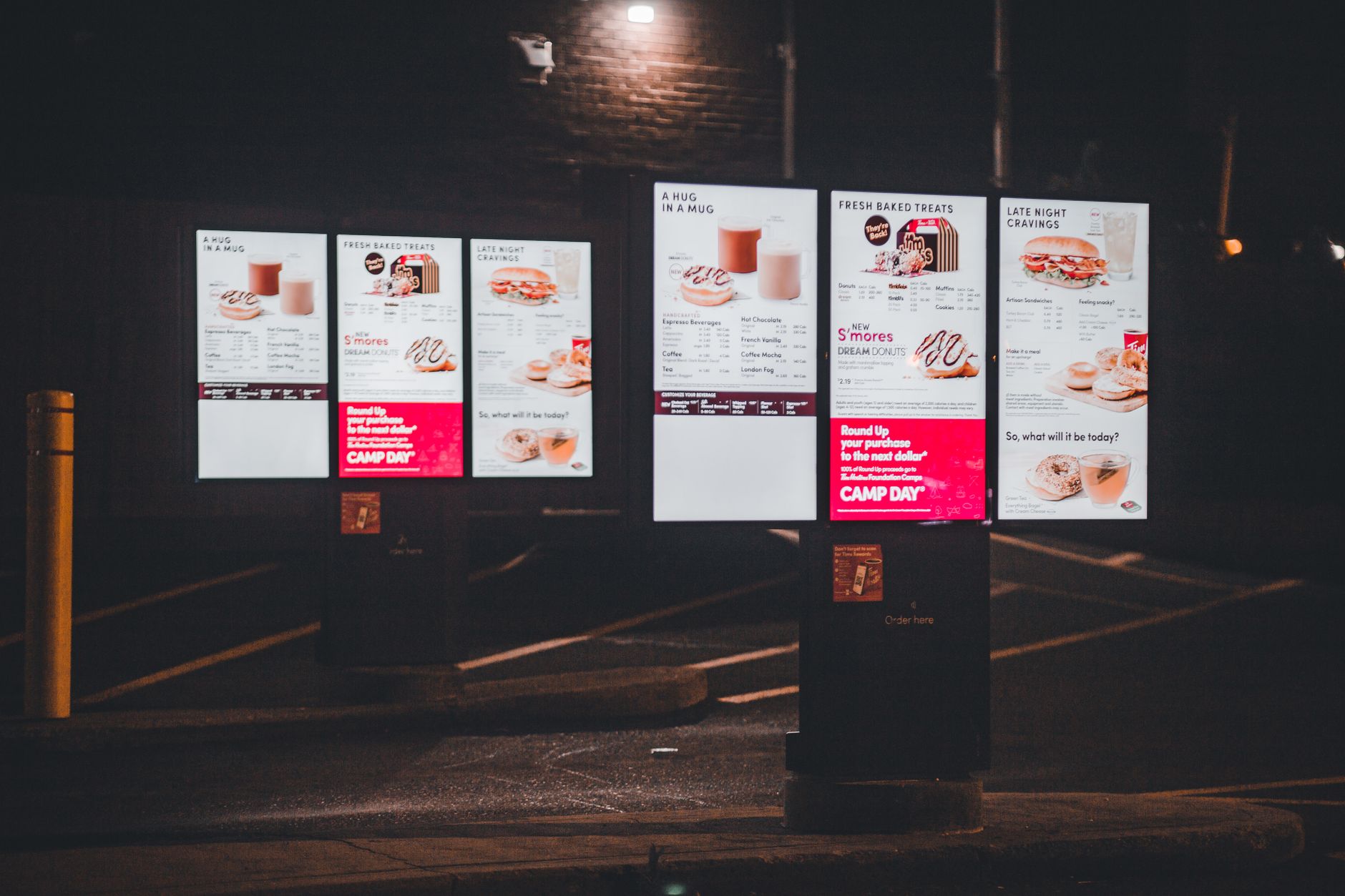
Five roast beef sandwiches. Five dollars.
You slid one bill across the counter at an Arby's somewhere in the 1990s and got back a bag that weighed more than the money you'd handed over. Nobody behind the register blinked. That's the part I keep coming back to.
The question isn't why the deal felt generous. It's how a price like that could exist at all, and what had to shift before the chain stopped writing it on the board.
A Promotion That Was Never Built to Break Even
Value menus usually get filed under "discount." That word hides the machinery.
A loss leader isn't a discount. It's a door. The sandwich gets priced below what it costs to make and serve so a customer walks in and then spends on the things that actually carry the margin: drinks, fries, a shake, one more sandwich for whoever's waiting back home. The headline offer gives that profit away on purpose.
The documented record is blunt about where the 5 for $5 sat in that structure: a loss leader, not some thin promotion that happened to squeak by. That tells you something structural. The deal was never going to survive on its own arithmetic. It survived on everything customers bought next to it.
Which sets up a condition most people never stop to think about. The whole thing only holds while two things stay true: customers keep buying the higher-margin extras, and the cost of the item you're giving away stays roughly where you assumed it would.
What a Loss Leader Is Actually Buying
A below-cost item is usually doing at least three jobs at once. It buys foot traffic. It buys trial from people who'd never otherwise walk through the door. And over time it buys habit, the quiet assumption that your chain is the affordable option, which is worth more than any single transaction.
None of that shows up on a receipt for a five-dollar sandwich. It shows up later, in the mix of what people order once they're standing at the counter.
The risk lives in the timing. A loss leader pays you back in future baskets while costing you money today. If the cost side turns against you faster than the habit side compounds, you're financing a promise you can't keep.
And that's where the second documented fact walks in: rising beef costs contributed to the end of the deal.
When the Ingredient Stops Cooperating
Beef is a commodity. Its price moves on feed costs, herd cycles, weather, export demand and a pile of inputs no single restaurant chain controls. When your headline ingredient climbs, every unit of a fixed-price offer gets more expensive to honor. You don't get to change the price, because the price *is* the marketing.
So the deal sat between two lines that were never designed to move together: a fixed price on the customer's side of the counter, a floating cost on the supply side of the building.
Eventually those lines meet. When they do, the offer stops being a promotion and becomes a standing obligation to lose money at a rate nobody planned for.
Rather than paraphrase the underlying documentation, here it is in its own words:
- "The 5 for $5 deal was a loss-leader strategy. Rising beef costs contributed to the end of the deal. Profit margin erosion was a key factor."
>
- Documented findings from the verified fact set compiled for this analysis
Note the verb. Beef costs *contributed*. The record doesn't say they were the only cause, and it's worth resisting the tidier version of this story, because the tidier version is wrong.
The Volume Trap
There's a stubborn belief that low prices can be defended forever through sheer volume. Sell enough units, the thinking goes, and the math works itself out.
Volume does do something real. It spreads fixed costs. Rent, equipment, salaried labor, utilities, all of it gets cheaper per unit as throughput rises. That part of the argument holds up.
What volume can't do is repair a negative margin on the item itself. If every deal unit loses money before you count what else the customer picks up, selling more of them scales the loss. Growth makes the problem bigger, not smaller.
Volume works only when the rest of the basket carries enough profit to absorb the giveaway. That's a condition, not a guarantee. Conditions fail.
One structural detail tends to get skipped in these conversations. In chains where stores are franchised rather than company-owned, a price set at the brand level lands on the operator's books. The corporate marketing decision and the local financial consequence aren't always the same conversation. I don't have franchisee-level financial data from the period, so I can't say how that dynamic played out here, only that it's the kind of friction that shapes how long a below-cost offer stays on the board.
The Counter-Argument Worth Taking Seriously
The cost story is well supported. It's also, on the available evidence, incomplete. And there's a reading of this episode that deserves more air than it usually gets.
The numbers tell you a deal became expensive to run. They don't tell you why the company chose to retire it *when* it did, rather than absorb the cost longer, rework the offer, or shrink the portion. Those are choices, and choices can be driven by things financial statements don't capture: what a brand wants to be known for, how much internal friction a program is generating, whether the traffic it brings is the traffic the company still wants.
I want to be precise about status here. That reading is an alternative interpretation, not a documented finding. I'm offering it because the primary explanation, while well grounded, doesn't fully close the question, and treating it as closed would overstate what the record shows.
The consumer-side version of this argument, the one that says the deal simply ended because of corporate greed, is weaker than it sounds. Not because executives are generous. It's weaker because it doesn't explain timing. Greed is a constant: present when the deal launched and present when it ended. A constant can't explain a change. Rising input costs and margin erosion can.
The Quality Explanation Doesn't Fit Either
The other common belief: the food got worse, and the price went up to match a product that had been cheapened.
There's no evidence for that in the material available here, and the mechanism doesn't line up. Quality declines and price increases are separate levers. A company cutting corners on ingredients is usually trying to *preserve* a price point, not raise it. The two moves pull in opposite directions.
What the record supports is narrower and less satisfying: the economics of the offer stopped working.
How to Read a Value Menu Like an Analyst
If you work anywhere near pricing, whether that's product, operations, finance, or category management, the 5 for $5 episode is a usable template. Not because it's a story about roast beef, but because the structure repeats.
Software companies discount a flagship tier to win a logo. Subscription businesses run a free plan to build a funnel. Retailers put a television below cost on the front page of a circular. Same architecture, different product.
Five questions cut through most of it:
- What's the fixed-price item, and which commodity or input drives its cost?
- What's the attach basket? What do customers actually buy alongside it?
- Who eats the loss: the parent company or the operator?
- What's the exit trigger? Under what cost condition does this offer get pulled?
- Is the headline value the same as the delivered value, once you account for what the customer has to buy to make the trip worthwhile?
Question four is the one teams skip. A promotion with no defined exit condition isn't a strategy. It's a liability with a marketing budget attached.
Key Uncertainties and Open Questions
This is where the piece has to be honest about its own edges.
No internal financial data from Arby's during the 1990s was available for this analysis, and that gap constrains everything above. We don't know the actual per-unit cost of the deal item, the average basket size, or the margin on the items that were supposed to carry the offer. There's no documented timeline for when the deal was retired, or how that decision got made.
We also can't weight the causes. Rising beef costs contributed; profit margin erosion was a key factor. But "contributed" and "key factor" are qualitative judgments, not measured shares. Whether beef was the dominant driver or one pressure among several isn't something the available material resolves, and anyone who tells you otherwise is filling a gap with confidence rather than evidence.
There's a further limitation worth naming plainly: no on-the-record executive commentary or third-party analyst assessment was available. That means the blockquote above comes from documented findings rather than a named human voice, which is a real shortfall for a story like this one. A franchisee who ran one of these stores through the 1990s would answer more in ten minutes than the public record does at all.
What the evidence does support firmly is the shape of the problem: a fixed customer price, a floating input cost, and a margin that had somewhere to go, which was down.
The Question That Doesn't Have an Answer Yet
Five sandwiches for five dollars was never sustainable on its own terms. That much is documented. What's unresolved is what a chain gives up when it decides a price that once filled a room is no longer worth defending, and whether that trade is ever really a choice or just arithmetic catching up on a delay.
If the 5 for $5 came back tomorrow at five dollars, would it even be the same offer? Or would it be a thinner sandwich, a smaller bag, a shorter menu, the same price tag stapled to a different promise? There's no data that answers that, and I'd be wary of anyone who claims there is.
Key Takeaways
- The 5 for $5 functioned as a loss leader. Its economics depended on attach purchases and stable input costs, not on the sandwich itself.
- Rising beef costs contributed to the deal's end, and profit margin erosion was a key factor. Neither is documented as the sole cause.
- Volume spreads fixed costs but can't repair a negative unit margin. More sales of a money-losing item scales the loss.
- Corporate greed doesn't explain timing. A constant factor can't account for a change in behavior.
- Any below-cost offer without a defined exit condition is a liability with a marketing budget attached.
FAQ
What was the Arby's 5 for $5 deal?
A promotion offering five roast beef sandwiches for five dollars. It was built as a loss leader, priced below cost to drive store traffic and attach purchases rather than to generate profit on the sandwiches themselves.
Was the deal profitable for Arby's?
The documented record describes it as a loss leader, meaning the offer itself wasn't the profit engine. Profit depended on what customers bought alongside it, the standard structure for below-cost promotions.
Why did the 5 for $5 deal end?
Rising beef costs contributed to the end of the deal, and profit margin erosion was a key factor. The available material doesn't establish which mattered more, or whether other factors were involved.
Did food quality cause the price increase?
There's no evidence for that in the available material, and the mechanism doesn't fit. Quality cuts and price increases usually pull in opposite directions. A chain trimming ingredients is typically trying to protect a price point, not raise it.
Will the 5 for $5 deal ever return?
That's outside what the evidence can answer. Any return would depend on current input costs and how the chain chooses to price against them, neither of which can be forecast from 1990s data.
How do fast-food chains keep prices low in the first place?
Through a mix of volume that spreads fixed costs, lower-cost ingredients, and menu engineering that steers customers toward higher-margin items. Volume alone doesn't hold a price down if the unit margin is negative.
What can analysts learn from this episode?
The structure repeats across industries. When you see a below-cost offer, whether that's a discounted flagship product, a free tier, or a front-page loss leader, ask what it's really buying, who absorbs the loss, and what condition would trigger its removal.
Reader Discussion
0No comments yet. Be the first to share your thoughts, strategic perspective, or feedback on this guide!
Post a Comment
Join the discussion. All constructive feedback and editorial insights are welcome.